Who Planted These Rubber Trees? Who Came to Plant Them?
In 1897, there were only 345 acres of rubber estates in the Federated Malay States; forty-three years later, over two million acres
In 1897, the total area of rubber estates within the Federated Malay States was 345 acres.
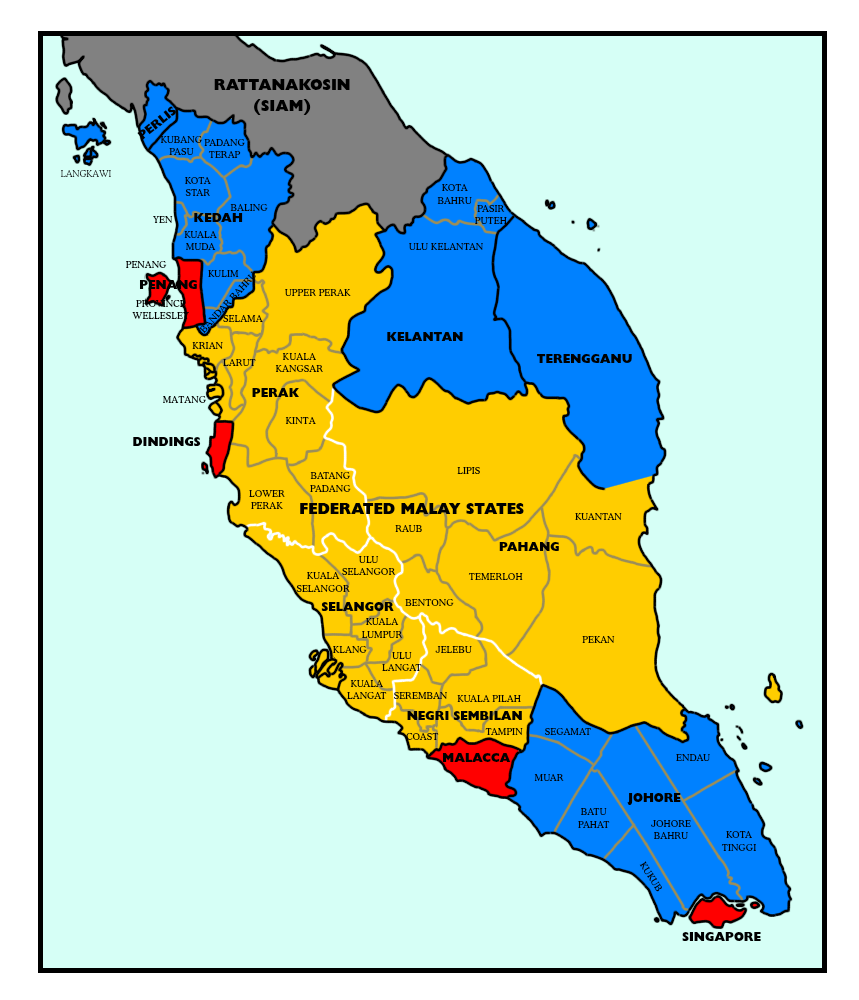
Eight years later, it was 43,435 acres.
By 1940, it was over two million acres—this land became the largest natural rubber-producing area in the world.
Rubber trees do not grow by themselves. They need people to plant them, wait seven years, and then, every day before dawn, people with knives have to slice the bark of every single tree to catch the white latex. Two million acres meant hundreds of thousands of hands.
What this article asks is just one thing: where did those hands come from, why did they come, and where were they placed after they arrived?
Push Down That Picture First#
Regarding this history, the most popular narrative is a three-panel picture:
The Chinese came to dig mines, the Indians came to tap rubber, and the Malays stayed in the countryside to grow rice.
The reason this picture is so popular is that it's easy to remember, and it provides a convenient starting point for every subsequent debate—each ethnic group was assigned a place, as if it were a natural division of labour.
In 1918, the actual composition of Malayan estate labour was as follows:
| Origin | Percentage |
|---|---|
| Indian descent | 57% |
| Chinese | 27.5% |
| Malay | 8.5% |
| Javanese | 5.8% |
| Others | 1.2% |
That year, there was a total of 368,564 workers on the estates. (Compiled by Economic History of Malaysia based on historical records; this site has not read the primary statistics it relies on.)
More than one in four estate workers was Chinese. Malays and Javanese together made up more than 14 percent. And on the tin mining side, there were Indian labourers too.
The three-panel picture is not just an inaccurate generalisation; it is a wrong generalisation. The reality was: three different recruitment paths sent different people to the same set of mines and estates.
Paths are the main characters of this article, not ethnic groups.
The First Path: Secret Societies, Credit-Tickets, and 40,000 Miners#
In the mid-nineteenth century, a place called Larut in northern Perak had vast deposits of tin sand buried underground.
Around 1870, the Larut mining district had about 40,000 miners, mostly from Guangdong—including Hakkas and Cantonese. They didn't come in dribs and drabs; they were brought by two sets of organisations: the Hai San (predominantly Hakka miners) and the Ghee Hin (predominantly Cantonese miners). These two names appeared in this site's article The "Advice" That Must Be Followed, because their gang fights ultimately became the British pretext for intervening in Perak. (Based on colonial records and later historical research; this site relies on encyclopedia-level sources for this.)
How did they come? Most could not afford a boat ticket. The prevailing method was the credit-ticket system—a broker advanced the ticket money, and the person repaid the debt through wages upon arrival. During the repayment period, the person's freedom was practically controlled by the creditor. In colloquial Chinese, this brutal practice was known as "selling piglets".
This system caused so many problems that in 1877, the Straits Settlements established a dedicated agency to manage it: the Chinese Protectorate. Its first head was William Pickering—the same man who relayed the Governor's message to the secret societies during the Pangkor negotiations in 1874.
The Second Path: Contracts, Kanganis, and the Port of Madras#
The rubber estates used a different set of methods.
The vast majority of estate labour came from southern India—about 90 percent from the Tamil-speaking areas of the Madras Presidency, departing from the ports of Madras and Nagapattinam.
The early method used was the indenture system: signing a contract, initially for five years, changed to three years after 1872. In 1884, the government-approved minimum wage was: for male workers, 12 Straits cents a day for the first year, and 14 cents thereafter; for female workers, 8 cents a day. (The above is from two summaries, BiblioAsia by the National Library Board of Singapore and Economic History of Malaysia, which corroborate each other.)
Later, the indenture system was replaced by another system called Kangani. Kangani is Tamil for "overseer"—he was a man who already worked on the estate and was sent back to his hometown to recruit people: his relatives, fellow villagers, and caste members. The newcomers had to repay travel and advance money, deducted from their wages, and the interest rate charged on these deductions was often higher than the actual borrowing rate.
This system was more binding than the indenture system. Contracts had an expiration date; kinship and debt did not.
A Year That Must Be Written Clearly#
Regarding the end of the indenture system, there is a widely circulated and very convenient claim: "In 1910, the Indian government banned the export of indentured labour."
This claim is wrong, and the direction in which it is wrong is crucial.
- In 1907, Malayan authorities established the Tamil Immigration Fund Ordinance and formed the Indian Immigration Committee, shifting the system so employers paid quarterly into a fund to provide free passage for labourers.
- In 1910, the Malayan authorities themselves abolished the indenture system—though actual enforcement dragged on until 1914.
- In 1917, it was the Indian government that, due to wartime needs, completely halted all overseas indentured emigration.
- In 1938, the Indian government banned all assisted emigration, and the Kangani system ended the same year.
In other words, the 1910 step was the colony winding down its own system, not the imperial metropole calling a halt. The difference of seven years involves entirely different subjects. One is "institutional self-adjustment", the other is "external intervention"—these two stories point in completely different directions for how we later understand the colonial economy.
This site originally thought it was the latter, too. We only found out it wasn't after checking.
The Third Path: The One Most Often Missed#
When telling this history, almost everyone mentions the first two paths. The third is almost never mentioned.
People from Java, southern Borneo, and Sumatra also migrated in massive numbers during the same period.
This path doesn't need estimating; there are exact numbers. The 1947 census was the last to break down the "Indonesian" population by island of origin. The count that time was:
| Origin | Number |
|---|---|
| Javanese | 189,400 |
| Banjarese (South Kalimantan) | 62,400 |
| Sumatrans | 26,300 |
| Boyanese (Bawean Island) | 20,400 |
| Bugis (Sulawesi) | 7,000 |
| Total | 309,150 |
Three hundred thousand people. (The definition of "Malaya" in this study includes Singapore.)
For comparison: in 1918, the total number of estate labourers in all of Malaya was 368,000. The number of people from just these five origin groups was close to the scale of the entire estate labour force.
- Javanese accounted for 60 percent of this, mainly concentrated in Johor. Most came from Central and East Java, with very few from Sunda or Madura.
- Banjarese made up 20 percent, coming from the immediate hinterland of Banjarmasin.
- Minangkabau: The social structure of Negeri Sembilan is directly related to them.
- Bugis: This group was not labourers, but a political force—this site has already explained their weight in the Johor-Riau royal line in The Return of the Royal Lineage to the South.
But They Weren't Called Labourers on the Census—That's the Key#
When they were counted in 1947, the vast majority listed their occupation as rice farmers, or rubber and coconut smallholders, with only a minority working on estates.
Does that mean they weren't recruited? Quite the contrary.
Tunku Shamsul Bahrin, a scholar who studied this migration, wrote: in the early days of Malayan plantation development, a very high proportion of Javanese came as indentured labourers—and many of them, after serving their contracts, stayed here and worked on their own smallholdings.2,3
They came as labourers, and after finishing their contracts, became farmers.
This single sentence explains two things.
First, why they looked like local rice farmers when counted in 1947—because by then, they literally were.
Second, why they were ultimately lumped into the "Malay" box. Rural rice farmers were exactly what Malays looked like in the colonial administrative mind. When a Javanese indentured labourer had been growing rice in Johor for twenty years, what was left on the census form to separate him from the Malay farmer in the next village?
The answer is: they couldn't be separated, so they weren't.
Why is this path missed?
Because on the census forms, they were mostly grouped into the "Malay" box.
In the previous article, Changing a Single Word, this site laid out the main heading of the 1891 census: "Malays and Other Natives of the Archipelago"—Malays and other natives of the archipelago were put in the same box, with Achinese, Boyanese, Bugis, Dyaks, and Javanese listed underneath. By 1931, the name of this major category became the even broader "Malaysians by Race".
So the people on this path "disappeared" statistically. They didn't disappear; they were counted in another column.
This has a direct consequence: today's debate over "who is an immigrant and who is not" uses a classification table that counts one batch of immigrants as locals and the other two batches as outsiders. When that table was created, by whom, and for what reasons, was covered in the previous article.
When Was That Stereotype Fixed in Place?#
Now put the three paths together to see something that is harder to spot.
Scholar Charles Hirschman, in his 1986 study, pointed out a chronological sequence that this site considers the most important thing to remember in this entire history.1,3
Early British Residents once treated the "lack of Malay economic activity" as an administrative problem to be solved—they believed that with the right policies or supervision, Malays would respond. Government projects of that era (like irrigation) indeed relied on Malay participation.
Then, Hirschman wrote:
"After the rubber boom began and Indian immigrants were available for the plantation sector and for public works projects, British officials no longer had to worry about the problem of getting Malay labor or cooperation. … In this context, Malay laziness could become a permanent piece in the 'mental furniture' of the colonial mind."
After the rubber boom heated up and Indian immigrants were in place, British officials no longer had to worry about getting Malay labour and cooperation. It was only in this context that "Malay laziness" became a permanent piece of furniture in the colonial mind.1,3
Note this sequence: It was not because Malays were lazy that they had to recruit from outside; it was because they recruited from outside that the claim of "laziness" never needed to be tested again.
When that miner in 1907 wrote "From a labour point of view, there are practically three races," he was not describing the innate nature of three peoples. He was describing a completed configuration of labour—and passing it off as innate nature.
Where Were They Placed?#
Hirschman's judgement on this entire period is as follows (this site also quoted this in the previous article, because it is the conclusion for both):
"The new immigrants, however, were not thrown into contact with Malays but were segregated geographically, economically, and socially from the local population. The colonial government 'managed' the plural society by trying to maintain the Malay feudal social structure in the countryside and a 'temporary' immigrant population working in the mines, plantations, and cities."
The new immigrants were not thrown into contact with Malays, but were segregated geographically, economically, and socially from the local population. The colonial government "managed" the plural society by trying to maintain the old Malay social structure in the countryside while leaving a "temporary" immigrant population to work in the mines, estates, and cities.1,3
The mines were in the hills, the estates in the inland rubber belt, and the rice paddies in the river valleys. Three groups of people could live in the same state for fifty years and barely cross paths in their daily lives.
Nobody chose that. It was the locations of the tin veins, the tree species, and the rice paddies, combined with an administrative arrangement that had no intention of letting them meet.
The Evidence for This Article, Explained Clearly by This Site#
The argumentative part is supported by a scholar's complete research; the numerical part is not. These two have different levels of strength and must be stated separately.
For Charles Hirschman's 1986 paper (Sociological Forum 1(2)), this site read the full text. It is the source of the three core arguments in this article: the relationship between demographic structural changes and immigration (p. 336); the chronological sequence of how the "Malay laziness" claim became fixed (p. 345, where he cites Butcher 1971); and the judgement that immigrants were segregated (pp. 356–357).
The 1947 numbers on island origins come from another scholar's complete research. Tunku Shamsul Bahrin's 〈The Pattern of Indonesian Migration and Settlement in Malaya〉 (Asian Studies (University of the Philippines) Vol. 5 No. 2, 1967); this site read the full text. He cites the 1947 census—which was the last census to make such a detailed breakdown; thereafter, official statistics no longer distinguished between Javanese, Banjarese, and Peninsular Malays. This point is independent of Hirschman and independent of the two website compilations below.
⚠️ The "Malaya" he refers to includes Singapore, which this site has noted in the main text.
The rest of the specific numbers only have secondary sources. The rubber planted area, the 1918 estate labour composition, the timeline of immigration laws around 1910, the 1884 wage scale—what this site read are these two compilations, not the original census reports, gazettes, and ordinances they are based on:
- Economic History of Malaysia, 〈South Indian labour in Malayan rubber estates: profits over people, 1884–1941〉 and 〈Malaya's early 20th century population change〉
- National Library Board Singapore's BiblioAsia, 〈Indian Migration into Malaya and Singapore During the British Period〉, Vol. 3 Issue 3, October 2007
(biblioasia.nlb.gov.sg/all-sections/vol-3-issue3-oct-2007-indian-migration-british-malaya-singapore/)
These two publications are themselves diligent compilations, but they are not peer-reviewed academic works, and this site did not go back to verify the original documents they cite.
For the two standard academic books on this topic, this site only found their bibliographies and did not read the main texts: Wong Lin Ken's The Malayan Tin Industry to 1914 and K.S. Sandhu's Indians in Malaya: Immigration and Settlement 1786–1957 (Cambridge University Press, 1969). The Internet Archive has placed access restrictions on both.
For the figure of 40,000 miners in Larut, this site cites encyclopedia-level sources, and both sources trace back to the same colonial archival tradition—strictly speaking, this only stands on one leg.
The 1918 labour composition table is the fulcrum of this article, and it currently has only one source. This site considers it credible (the numbers are precise to the single digit, suggesting they were copied from primary statistics), but credible does not mean verified. The day those estate labour statistics are digitised, the first section of this article will be rewritten.
Next article: 8 December 1941, dawn. On the beaches of Kota Bharu.
Sources 3 Every important claim here can be checked. Open it and see.
Do not trust this site. Check it — every source below is clickable.
This site is written with AI assistance. Please check us.
AI can invent citations that look completely convincing — a real author's name, a plausible title, a sensible year, for a work that does not exist. This is not a theoretical risk; it is a known failure mode. That is why every source on this site is clickable. If a reference cannot be found anywhere, it may well not exist — and we want to know.
How to check us →Reader Comments
Be the first to share your thoughts.