1MDB Scandal: Yachts and Masterpieces at the US Press Conference
How a Development Fund Turned into a Transnational Asset Recovery Case and Pushed Mahathir into the Opposition Camp
On July 20, 2016, the US Department of Justice held a press conference.
On 28 July 2015, more than one door closed in Putrajaya.
The Attorney General at the time, Abdul Gani Patail, was replaced. Deputy Prime Minister Muhyiddin Yassin and Minister Shafie Apdal, who had publicly questioned 1MDB, were removed from the Cabinet. Four of the Public Accounts Committee's 13 members, including its chair, were appointed as ministers or deputy ministers; hearings that were due to recall 1MDB management were then postponed. 1,2
These were not coincidences added by a later novelist. They happened on the same day and were recorded one by one in the Malaysian Bar's extraordinary general meeting resolution that year. 1,2
Before That Day, Documents Had Already Left the Company#
A set of electronic data from PetroSaudi reached journalists. Sarawak Report, Britain's Sunday Times and The Edge used it to examine 1MDB's earliest joint-venture transactions. The Edge later explained publicly that it was trying to trace the movement of money, and denied fabricating documents to bring down the government. 1,2
The government side and PetroSaudi challenged how the material had been obtained and whether it was complete, describing the reports as a political attack. That dispute could have been answered by releasing the original documents.
Instead, Sarawak Report was blocked in Malaysia. The Home Ministry suspended The Edge Weekly and The Edge Financial Daily for three months on the ground that their reporting could cause public alarm; the publisher and editors were also called in by police. The court later overturned the suspension. 1,2
Once a financial document reached the public, the story abruptly changed from "was this transaction reasonable" to "who was still allowed to report it."
Investigators Began Investigating, Then Their Positions Changed#
On 4 July, the Attorney General announced a task force involving the Attorney General's Chambers, Bank Negara, the police and the MACC to investigate allegations that money had entered the Prime Minister's personal accounts. Days later, the task force searched offices connected to 1MDB and SRC and took documents and computers. 1,2
On 26 July, Muhyiddin said at an UMNO Cheras division event that the 1MDB board should be held responsible for more than RM42 billion in debt, and disclosed that he had asked the Prime Minister to replace them. 1,2
Two days later, he was no longer Deputy Prime Minister.
The government had the power to reshuffle the Cabinet and to replace the Attorney General according to law. The new Attorney General, Mohamed Apandi Ali, said Abdul Gani had left for health reasons and that the procedure complied with the Constitution; Cabinet members, meanwhile, were subject to the Prime Minister's collective leadership.
But when those replaced, transferred or suspended, and the interrupted PAC inquiry, all revolved around the same case, the public had good reason to demand a fuller explanation than "an ordinary administrative decision." 1,2
On the table were not political slogans from the Malaysian Parliament, but rather a list of assets targeted for recovery: luxury real estate in New York and Los Angeles, paintings by Van Gogh and Monet, a private jet, and movie rights. The civil complaint alleged that these assets were tied to funds misappropriated and laundered from 1MDB. 3,4
A fund originally intended to drive national development suddenly appeared before global cameras through foreign courts.
Not Entirely Ignored Domestically#
The Parliament's Public Accounts Committee (PAC) pointed out in its 2016 report that 1MDB's capital structure and financial performance were unsatisfactory, it was overly reliant on debt, its board of directors did not receive certain critical information, and it recommended further investigations into the former management. 5,6
However, the Auditor-General's full report was classified at the time as a document under the Official Secrets Act. The government claimed this was to protect the integrity of the investigation; critics asked why a company whose risks were borne by the public had its most important audit shielded from public viewing.
Najib responded that the PAC report did not prove the external claim that all RM42 billion had "vanished," emphasizing that the problems lay mainly in management and capital structure, and that the government would take action based on the recommendations. 5,6
This rebuttal corrected an oversimplification: total debt does not equal total funds stolen.
But it did not answer the specific fund trails and assets listed in the US complaints.
Who Must Be Held Accountable#
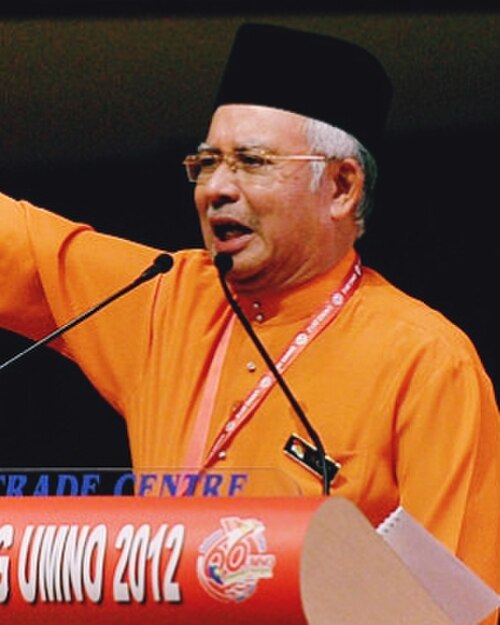
1MDB was wholly owned by the Minister of Finance Incorporated. Najib was, at the time, both the Prime Minister and the Minister of Finance, and he headed the highest political oversight structure relating to 1MDB.
Therefore, even at a stage where individual criminal liability had yet to be ruled upon point by point in court, Najib and his UMNO/Barisan Nasional government had to bear the highest political responsibility for the appointments, oversight, borrowing scale, audit secrecy, and the handling of the matter after receiving alarms. 5,6,1
The responsibility could not just be pushed onto a former CEO. If tens of billions of ringgit in debt could accumulate in a state-owned company, and the Prime Minister cum Finance Minister claimed credit when it succeeded but professed ignorance when it failed, then oversight itself became meaningless.
Mahathir seized upon this point and publicly broke with his hand-picked successor. He left UMNO, participated in the formation of Parti Pribumi Bersatu Malaysia (Bersatu), and later even collaborated with the camp of Anwar, whom he had once sacked and who was still in prison.
This was not old grudges disappearing.
It was 1MDB leading enemies to a calculation: defeat the common opponent first, and deal with their shared history later.
Sources 6 Every important claim here can be checked. Open it and see.
Do not trust this site. Check it — every source below is clickable.
This site is written with AI assistance. Please check us.
AI can invent citations that look completely convincing — a real author's name, a plausible title, a sensible year, for a work that does not exist. This is not a theoretical risk; it is a known failure mode. That is why every source on this site is clickable. If a reference cannot be found anywhere, it may well not exist — and we want to know.
How to check us →

Reader Comments
Be the first to share your thoughts.