The UEC Debate: Recognizing a Diploma or Protecting a Language Boundary?
The affirmative argues "conditional recognition is progressive progress," the negative argues "half-hearted measures equal non-recognition"—six debaters, open debate, three judges, every number sourced
Proposition: Should Malaysia's public universities formally recognize Chinese Independent School Unified Examination (UEC) scores as an admission qualification? The affirmative argues "conditional recognition is a viable first step," the negative argues "opening only four Chinese-related fields is not recognition, it is placement." The debate follows standard parliamentary debate format: three debaters per side (first speaker for opening, second speaker for development, concluding speaker for closing), open debate, and three adjudicators' evaluations. Every numerical claim is sourced with citation.
Debate Background: The UEC was established by Dong Zong [Board of Trustees of Chinese Independent Schools] in 1975 and is currently implemented in 63 Chinese Independent Schools nationwide1. In 2026, there are 387,406 Chinese secondary students in Malaysia, of whom 75,144 (19.4%) attend independent schools2. UEC qualifications are recognized by over a thousand universities worldwide, yet Malaysia's federal public universities have never formally recognized them1. In May 2026, the government announced a conditional university admission pathway, with the Director-General of Higher Education explicitly stating: "This is not recognition of the UEC curriculum"3.
The Malay Language Protection Coalition · First Speaker Opening Statement#
Distinguished judges and members of the opposing team. Let us clarify the weight of this proposition. Federal Constitution Article 152 establishes Malay as the national language—this is a core clause of the nation's founding covenant4. We are not simply discussing a diploma, but rather asking: when public universities base admission on credentials from non-national language curricula, in what direction will the nation's education policy pivot?
The government's position is clear. The Director-General of Higher Education stated in May 2026: "This is not recognition of the UEC curriculum, what matters is that there is now an admission pathway"3. This statement is the policy's precise positioning—a pathway is a pathway, recognition is recognition. They cannot be conflated. We hold that this boundary is correctly drawn.
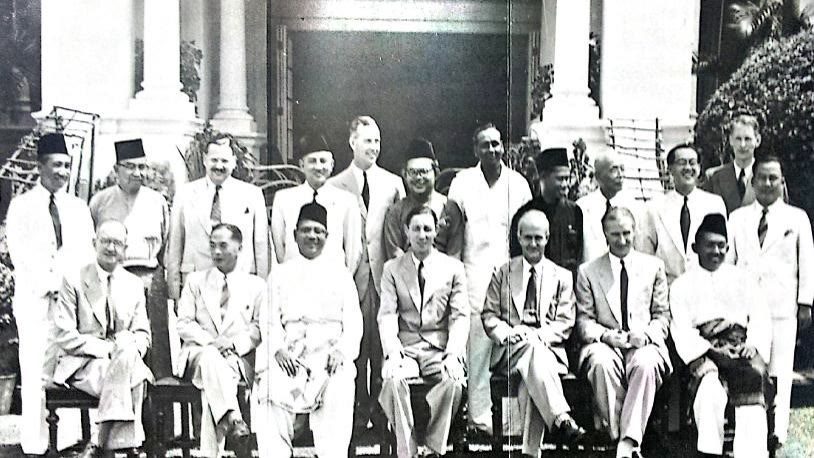
The opposing side will certainly mention East Malaysia has already recognized UEC. True: Sarawak in 2016, Sabah in 20195. But these states have their own educational authority arrangements that cannot simply transfer to federal policy. Federal public universities serve the entire nation, not a single state's political community.
Our position: the current conditional pathway already opens a door for independent school graduates. The door opens to only four Chinese-related fields because that is the starting point both sides can currently accept36. Reform should be gradual, not treat national language policy as a negotiating chip.
The Pluralist Education Coalition · First Speaker Opening Statement#
We begin with a fact: this debate concerns fewer than one in five of Malaysia's Chinese secondary students2. Scholar Ooi Kok Hin is more direct—this policy affects fewer than 3% of all secondary students, yet the political intensity bears no proportion to the actual scale7. This seems less an educational discussion than a vote mobilization around identity anxiety.
The UEC is recognized globally by over a thousand universities1. A Malaysian child holding this diploma can apply to universities in Britain, Australia, Taiwan, Singapore—yet cannot claim equivalent status in their own country. What logic is this? ISEAS researcher Syaza Farhana observes: "When you place English international schools and rejection of Chinese independent schools side by side, you see that the real problem is not language—it is ethnicity"8.
As for the affirmative's "conditional pathway"—only four Chinese-related fields open6; medicine, engineering, science fields are entirely excluded3. We ask the affirmative: when an independent school student wishing to study engineering holds a qualification recognized globally, and is told in their own country "you are only suited for Chinese studies"—is this equal educational opportunity, or institutional career limitation?
Our position: conditional pathways are not recognition; they are placement. We demand not merely a door, but entry equal to other Malaysian students.
The Malay Language Protection Coalition · Second Speaker Development#
The opposing side characterizes four Chinese-related fields as "placement." We must expose the inversion in this framework.
UEC's medium of instruction is Chinese8. Students have undergone six years of systematic training in a Chinese environment; naturally they are best suited to continue studies in Chinese-related fields—this is not discrimination, it is curriculum alignment. Your curriculum is Chinese; the university offers you a Chinese studies pathway. What is the objection?
The real question is this: if independent school graduates genuinely wish to enter medicine, engineering, or other professions, they can register for Malay Language and History examinations set by the National Examination Board, plus relevant SPM subjects3. The pathway exists, but requires additional preparation—exactly as other non-mainstream curriculum students need supplementary examinations. This is not obstruction; it is standard.
The East Malaysian example illustrates the point well. After Sarawak recognized UEC in 2016, the multiethnic local community experienced no resulting confusion in language policy5. But federal-level considerations differ—Sarawak itself possesses a distinctive ethnic structure and historical agreements that cannot serve as templates for federal replication.
The Pluralist Education Coalition · Second Speaker Development#
The affirmative's "curriculum alignment" theory requires we expose its structural problem.
Malaysia is a plural society—Chinese citizens comprise approximately 23% of the national population7. When a community representing nearly one-quarter of the population operates its own internationally recognized examination system, yet is told in its own country "you are only suited for your own language"—this is not policy logic but circular reasoning.
The affirmative says independent school graduates can retake SPM subjects. Let us ask: when a student who has passed an examination equivalent to A-level standard is required to retake the equivalent of O-level SPM subjects before applying to the same university—what does this mean? More critically: over 80% of UEC students have actually already passed the SPM Malay Language examination7—they are not linguistically incapable; they are barred by an administrative gate.
ISEAS researcher Syaza Farhana raises a more fundamental question: Malaysian youth anxiety regarding ethnic relations stands at 87.7%, the highest in Southeast Asia8. When the next generation's profound anxiety meets this debate's political intensity, we must ask: which institutional arrangement provides young people greater security rather than less?
Open Debate#
(Speakers alternate)
Malay Language Protection Coalition: The opposing side repeatedly states "80% of independent school graduates have passed SPM Malay"7—does the conditional pathway not open precisely for them? If 80% can proceed, where lies the problem?
Pluralist Education Coalition: The problem is the remaining 20%, and the fact that those 80% find only four Chinese fields when they walk through6. "A door opens" and "equal choices exist" are two different things.
Malay Language Protection Coalition: Sarawak recognizes UEC, and Sarawak too has Chinese, Ibans, and Dayaks—plural diversity equal to Peninsular Malaysia. Why can Sarawak proceed but not the federation?
Pluralist Education Coalition: We acknowledge this is well-asked. Sarawak's answer is: after recognizing UEC, Malay language's position suffered no impact5. Precisely as we have argued—two things can coexist, but some have chosen to make them zero-sum.
Malay Language Protection Coalition: The researcher cited by the opposition states this policy affects fewer than 3% of all students7. We ask the opposition: why does a policy affecting merely 3% warrant breaking all consensus?
Pluralist Education Coalition: Because justice does not scale down based on numbers. Moreover, those 75,144 independent school students are not statistics; they are people—their educational futures deserve serious consideration2.
Malay Language Protection Coalition: Federal Constitution Article 152 resulted from inter-communal negotiation at independence. To describe it today as "obstructing educational equality" denies the history of all parties who reached that accord4.
Pluralist Education Coalition: The identical Article 152 that the affirmative cites also guarantees citizens' right to use their mother tongue4. The Constitution protects the national language; it does not close educational doors for others. You cannot quote only the first half of Article 152.
The Malay Language Protection Coalition · Closing Statement#
The proposition is not "is UEC good?" but "should federal public universities formally recognize UEC as an admission qualification?"
We have acknowledged from the outset: the conditional pathway is imperfect36. Yet it is the first step achievable within political reality. The opposition says "four fields are insufficient"—very well, that is negotiable. But negotiation requires first acknowledging we inhabit a society where all parties must remain at the same table.
Education policy does not operate in a vacuum. Malaysia harbors genuine ethnic tensions, genuine anxieties about the national language's standing9. We reject the simplification of these anxieties as mere "political manipulation"—history shows that unheard anxiety ultimately manifests more forcefully.
Gradual progress, then expansion. This is the responsible path.
The Pluralist Education Coalition · Closing Statement#
The closing statement makes one point.
In May 2026, the government announced a pathway. The Director-General said: "This is not recognition of the UEC curriculum"3. Dong Zong said: "half-hearted"6. Researchers said: "both sides dissatisfied"7.
This is not successful reform; it is an arrangement where everyone loses.
75,144 independent school students have pathways before over a thousand universities worldwide, yet in their own nation are guided toward four Chinese fields162. We do not demand privilege; we demand the same evaluation starting point as other Malaysian students.
Syaza Farhana's words merit placement here last: "If identity continues to be conscripted as an electoral shortcut, Malaysian youth will inherit a political system treating division as governing strategy"8.
This debate's cost, finally, is borne by young people.
Adjudicators' Evaluations#
Adjudicator One · Education Policy Perspective#
Tonight, both teams sidestepped a critical number: how many students actually admitted under the conditional pathway thus far? The pathway was announced May 2026, applications opened June 30, actual enrollment figures remain unpublished3. Before that number surfaces, debating "are conditions broad enough" amounts to discussing an unmeasured gate.
The affirmative argues gradual progress is pragmatic. The opposition argues half-measures equal non-movement. Both are correct—they are weighing different things: the affirmative weighs political feasibility; the opposition weighs substantive equality. Neither measure is wrong, yet neither side clearly articulated which ruler they used.
Adjudication perspective: The Pluralist Education Coalition demonstrated more systematic data use (87.7% anxiety, fewer than one-third admission rates, four specific field restrictions); the Malay Language Protection Coalition showed stronger framework stability, but occasionally substituted "political reality" for argument.
Adjudicator Two · Constitutional and Legal Perspective#
Tonight's most pressing question concerns Article 152's fragmented quotation by both sides4.
Article 152 contains two protections simultaneously: Malay as national language, and citizens' right to use mother tongues. The affirmative quoted the first; the opposition quoted the second. The genuine constitutional question is: how do these two protections coexist in federal public university admission policy? No one attempted to answer tonight.
Sarawak's precedent also lacked deep examination5. If a multiethnic state recognized UEC in 2016 without weakening Malay language education, then the federal-level "national language threatened" argument requires specific mechanism explanation, not mere political sensitivity citation.
Adjudication perspective: Tonight's constitutional reasoning was the session's weakest link. Both sides claimed constitutional standing but neither demonstrated how courts have interpreted this article.
Adjudicator Three · Social Cohesion Perspective#
This debate harbors a shared danger: both sides painted the opposition's coalition more monolithic than reality.
Fact: most Chinese parents who chose national schools2 do not therefore oppose independent schools; those supporting national language protection need not oppose broader independent school pathways. ISEAS data show ethnic relations anxiety among youth reaches 87.7%8—this anxiety contains simultaneous fears: "will my culture disappear?" and "will my neighbor become threatening?" Both apprehensions exist, distributed across different people.
A system that cannot place 75,144 independent school students on equal starting footing with other Malaysian youth, and a social climate making Malay parents feel the national language's standing precarious, represent two genuine problems729. This debate requires not which side prevails, but institutional arrangements addressing both fears—not exploiting them politically.
Question to carry forward: If the federation formally recognized UEC while maintaining national language education standards unchanged—which side would suffer genuine loss? If that loss is substantive, evidence should demonstrate it, not merely political rhetoric.
This article represents civic education writing; position statement appears in the footer. Numbered source citations in text (such as 1) correspond to the sources list above and may be consulted for specific references.
Sources 9 Every important claim here can be checked. Open it and see.
Do not trust this site. Check it — every source below is clickable.
This site is written with AI assistance. Please check us.
AI can invent citations that look completely convincing — a real author's name, a plausible title, a sensible year, for a work that does not exist. This is not a theoretical risk; it is a known failure mode. That is why every source on this site is clickable. If a reference cannot be found anywhere, it may well not exist — and we want to know.
How to check us →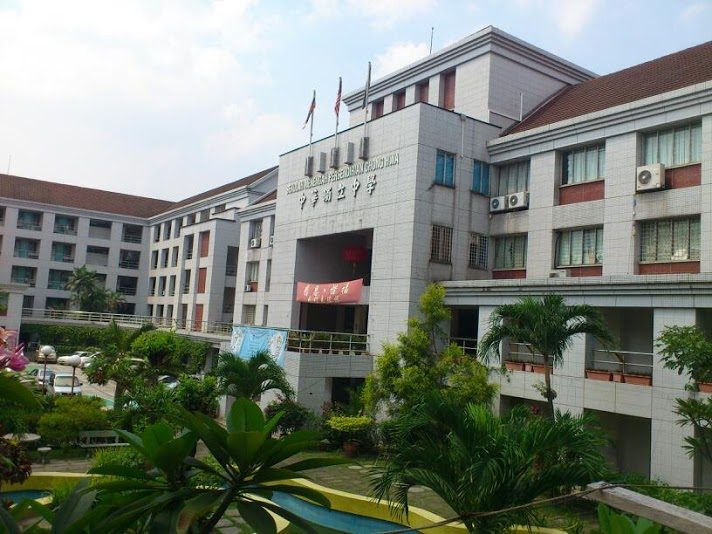
Which side convinced you?
Vote to see how other readers chose.
Your vote cannot be changed once submitted. Please choose carefully before confirming.
Reader Comments
Be the first to share your thoughts.