What Was the Double Six Sabah Tragedy? After Eleven Lives Were Lost
A Nomad lost its control, the state government lost its core, an oil agreement was signed eight days later, and the inquiry was sealed for 47 years
In the afternoon of 6 June 1976, a GAF N‑22B Nomad bearing registration 9M‑ATZ returned from Labuan to Kota Kinabalu.
The airport was within sight. During the final approach, the aircraft’s nose suddenly pitched up. The pilot applied forward control inputs until the limit of the control was reached, but the aircraft remained out of control and crashed in Sembulan at about 3:42 p.m. All eleven people aboard were killed. 1,2,3
They were not ordinary passengers. Among the victims were Sabah Chief Minister Tun Fuad Stephens, three state ministers, a deputy minister, and a senior officer responsible for finance and development. A government that had been in power for less than two months lost its chief minister and much of its core decision‑making team. 2,4,5
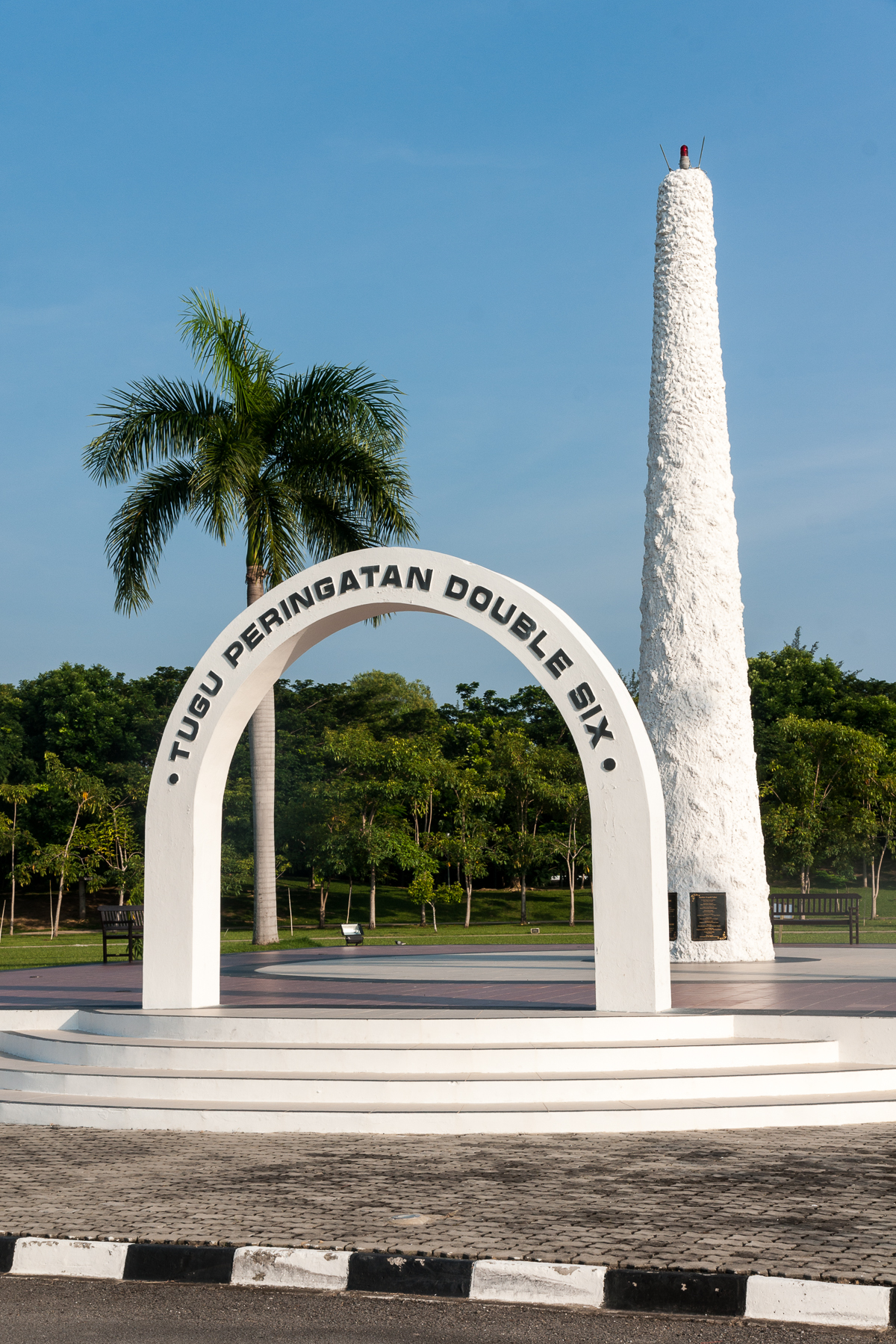
They had only just toppled the old government#
Before the crash, Sabah had recently undergone a change of government. Tun Fuad was not a newcomer to politics; he had previously served as Sabah’s first chief minister and later, with Harris Salleh, founded BERJAYA to challenge USNO’s leader Mustapha Harun. In the April 1976 state election, BERJAYA secured 28 of 48 seats while USNO won 20. Tun Fuad was sworn in again as chief minister. 5,7
When the aircraft crashed, the ballot paper ink still seemed wet. The new government was rearranging posts, taking over files and redefining ties to Kuala Lumpur.
A trip to Labuan had gathered several core figures in the same small aircraft: Housing and Local Government Minister Peter Mojuntin, Works and Public Services Minister Chong Thien Vun, Finance Minister Salleh Sulong, Deputy Minister Darius Binion, Permanent Secretary to Finance Wahid Peter Andau and the Chief State Economic Planning Unit Syed Hussein Wafa. 2,4
The loss was greater than the replacement of a chief minister. The new government lost its political leader, its financial stewards, its works overseer, and senior administrative officers at a time when their experience was most needed.
Harris Salleh then took over as chief minister. Legal processes moved quickly, but Sabah’s politics could never return to the state of 6 June. 4,5
The agreement eight days later#
The most sensitive part of this story concerns oil.
The 1974 Petroleum Development Act concentrated ownership and management of petroleum resources in Petronas. The producing state received a cash payment equal to five per cent of its contribution value. The agreement between Sabah and Petronas was signed on 14 June, eight days after the crash. 8,6
From this emerged a riveting narrative: Tun Fuad would not accept the five per cent, so he was to be removed; Harris would assume the role and sign immediately.
The story links date, power, and death in a tidy line. Yet there is no public evidence that the aircraft was sabotaged because of oil negotiations or that anyone planned the crash. A 2023 published report states there was no sabotage, no fire, no explosion, or engine failure. 1,4,3
Harris and the then‑Federal Minister of Finance, Tengku Razaleigh Hamzah, later said that Tun Fuad did not refuse the five per cent rule and was indeed willing to sign. These recollections are worth recording but do not constitute a full contemporary account of the negotiations. 6,9
The question that matters is not whether a conspiracy has been “solved”. The question is why a report that had been completed was withheld from the public for nearly half a century.
The answer locked for 47 years#
The inquiry was completed on 25 January 1977 and presented to the cabinet in March, but was not released to the public. The longer the government stayed silent, the easier that silence itself seemed like another suspect. 2,4
Decades later, Harris himself applied for judicial review. In March 2023, the High Court of Kota Kinabalu acknowledged that the tragedy had long been shrouded in speculation and that the public had a legitimate interest in knowing the facts and the investigation’s conclusions. The government then declassified the report in April. 2,4
There was no bomb inside.
What surfaced was a series of ordinary failures that still produced chaos: baggage was mis‑placed at the rear, the centre of gravity far exceeded the rear limit, there was no solid evidence that loading calculations and centre‑of‑gravity determinations were correct, the pilot had flown for 11 hours 7 minutes against the company limit of 10 hours, and training, record‑keeping and operational oversight were also weak. 1,3
During the final approach, the 25‑degree flap caused the unbalanced nose to pitch up. The pilot applied control until the range of motion was exhausted but still failed to lower the nose. The report linked the crash to loss of control due to the centre‑of‑gravity position and operational and supervisory factors. 1,3
The absence of evidence of murder does not mean there is no accountability. That accountability may not be an illicit mastermind in the shadows but rather a system that permitted a flight with an incorrect centre of gravity, weak load control and inadequate oversight.
What Sabah lost#
Easy conjecture is compelling. If Tun Fuad had lived, would he have demanded more oil revenue? Would his relationship with the center have been different? No documents can answer that.
What is certain is that the crash accelerated Harris’s rise, while BERJAYA remained in power until 1985. Sabah politics continued to revolve around state rights, local resources, immigration, leadership change and the relationship between state elites and federal power. The Double Six tragedy did not create all of these disputes, but it swapped the people at the table at a particularly fragile transition. 5,8
A plane fell in less than a minute. Sabah took 47 years to read the report about it.
How evidence is used#
The last minutes of flight are reconstructed from the investigation report. Time, centre of gravity, flap, control movements, duty time and the lack of sabotage come from the original Ministry of Transport report, cross‑checked with ministry statements and news reports. 1,2,3
Oil suspicion is treated as a public dispute, not a case fact. The agreement date and the five‑per‑cent rate are checked through academic studies; Harris’s and Tengku Razaleigh’s statements are labeled as later recollections. 6,9
The political fallout is not conjecture. BERJAYA’s victory, Harris’s succession and federal‑state resource politics are backed by election data, judicial decisions and scholarly research. 4,5,8,7
This chapter is marked sensitive: true. Any new original material should update conclusions, not simply reinforce the old story.
Sources 9 Every important claim here can be checked. Open it and see.
Do not trust this site. Check it — every source below is clickable.
This site is written with AI assistance. Please check us.
AI can invent citations that look completely convincing — a real author's name, a plausible title, a sensible year, for a work that does not exist. This is not a theoretical risk; it is a known failure mode. That is why every source on this site is clickable. If a reference cannot be found anywhere, it may well not exist — and we want to know.
How to check us →

Reader Comments
Be the first to share your thoughts.