Who is Hang Tuah? Five Companions, Loyalty, and a Contested Hero
The Malay Annals and the Hikayat of Hang Tuah present vivid stories, but questions of lineage require more rigorous evidence.
Di dalam istana, seorang lelaki telah dijatuhi hukuman mati.
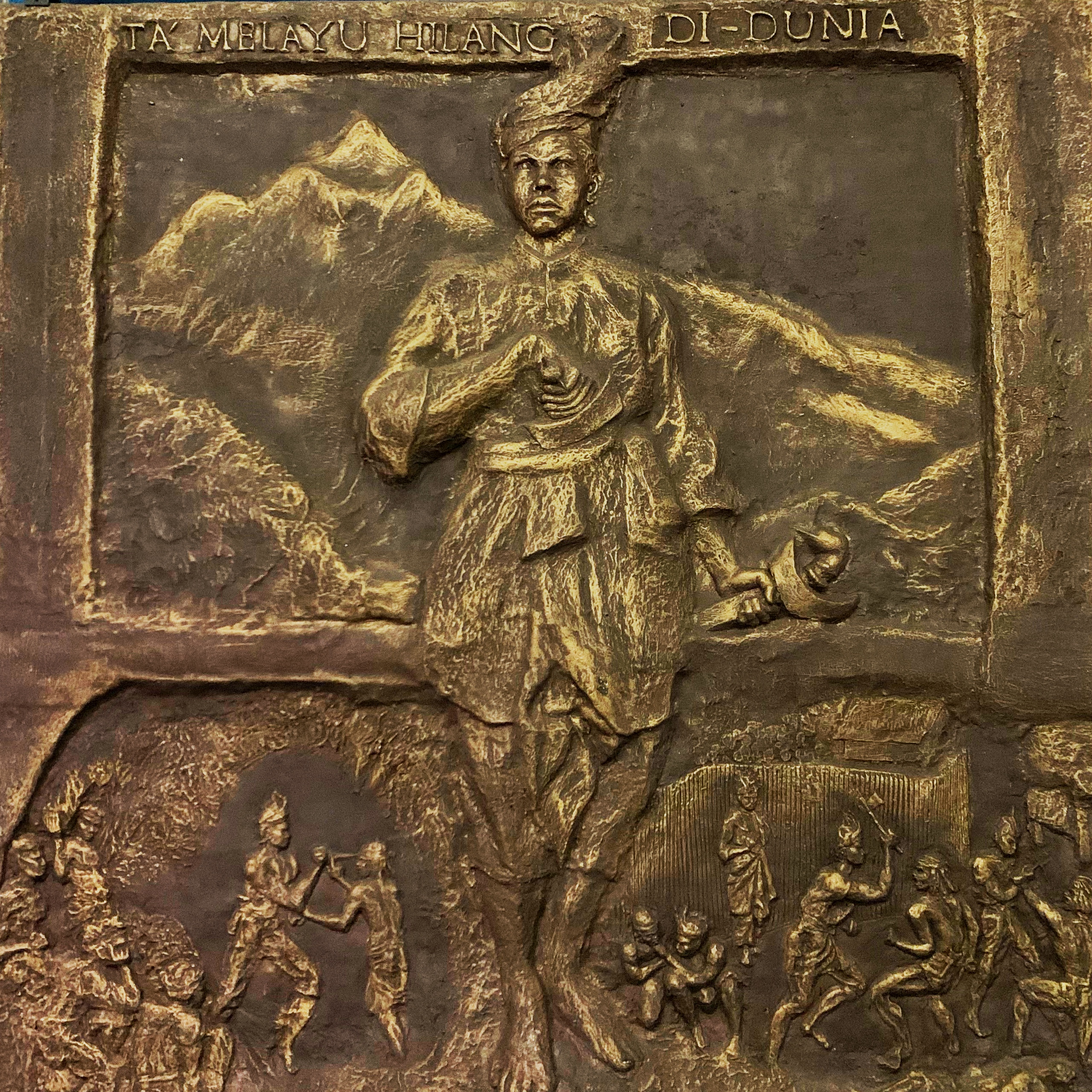
Ini bukan hukuman mati yang biasa.
Dalam cerita, lelaki itu ialah Hang Tuah. Sultan mempercayai fitnah dan memerintahkan kematiannya, tetapi Bendahara menyembunyikannya. Orang istana menyangka Hang Tuah sudah mati. Hang Jebat juga mempercayainya, lalu bangkit melawan. 2,4
Five Names#
Hang Tuah is not a lone figure. In popular tales, his four companions are Hang Jebat, Hang Kasturi, Hang Lekir, and Hang Lekiu. They learned martial arts together, entered the palace together, and became the most renowned group of warriors in the Malacca Sultanate stories. 2,4
For centuries, people have read about friendship, courage, and loyalty in these five names. Yet one question continues to haunt the tale: when power punishes an innocent servant, should his companion be obedient or rebel? The question is most acute regarding Hang Jebat.
Why Jebat Rebellions#
In the popular version of the Hikayat Hang Tuah, Jebat seizes the palace after hearing that Hang Tuah was killed without justice. The sultan later learns that Hang Tuah is still alive, and then summons him back to quash the rebellion. 2,4
Hang Tuah does not first seek justice for his companion. He takes up arms and ultimately kills the man who rebels for his sake. 2,4
That is why this tale endures. It is not merely a clash between two heroes. It brings together two demands difficult to reconcile: loyalty to the king or loyalty to justice?
In the Malay Annals, the Name Changes#
The most recognized contemporary version features Hang Tuah alongside Hang Jebat. In the tradition of the Malay Annals, Hang Tuah's opponent is often called Hang Kasturi. 5,4
This difference is not a minor spelling variation. The story is not a record, court report, or news written on the day of the event. It reaches us through palace texts, oral tales, manuscript copies, and later literary treatments. 6,3
When the Hikayat Hang Tuah places Jebat at the forefront, the tale becomes a conflict between loyalty and justice. The name swap also alters the lessons the story conveys.
The Book Truly Exists#
The Hikayat Hang Tuah itself is real and holds a significant position. The UNESCO Memory of the World list includes two manuscripts in the National Library of Malaysia, MSS 1658 and MSS 1713. UNESCO states that the anonymous manuscript was written on European paper about two hundred years ago and recognizes the work as a literary classic and traditional Malay epic. 1,6
However, a manuscript about two centuries old is not a direct record from the 15th century. It demonstrates that the Hang Tuah story already had a mature written form around the 19th century, not that every episode actually occurred as narrated.
Hang Tuah as a literary figure is certain. Hang Tuah as a historical figure still requires evidence of doubt.

Outer Shadows are Not the Full Name#
Portuguese and Ryukyuan sources mention a title or rank that is nearly similar. This is worth discussing, but a positional title is not the same as the name Hang Tuah. The maritime sultanate surely had officials who handled maritime affairs and envoys; that position could be held by more than one person. 2,4
A story can also compile memories of many people into one name.
Is He of Chinese Descent?#
The internet once spread the claim that Hang Tuah was a Chinese person, even claiming that DNA analysis proved he and his companions were from China. Their names were interpreted as sounding like Chinese and were linked with Princess Hang Li Po or Ming entourage. 2,4
This claim is interesting because it seems to give modern Chinese society a place at the center of the Malacca hero’s story. But where is the evidence?
To date, publicly verifiable sources provide no DNA report, no chain of tomb samples, or 15th‑century documents mentioning Hang Tuah as a Chinese, descendant of Hang Li Po, or a Ming guard. Rusaslina Idrus’s study examined how this claim spread and described it as a cybermyth—a cyber myth. 2,4
The conclusion must be precise: reliable public sources have not confirmed that Hang Tuah was of Chinese descent. This is not proof that he was not Chinese. It simply means that evidence is insufficient to present the claim as fact.
Why the Question Arises#
Hang Tuah is too great to be left as a small story. When his name is placed at the center of a Malacca narrative, of sultan, loyalty, courage, and Malay identity, other societies also begin to ask whether a portion of his legacy belongs to them.
Idrus records various modern claims: Hang Tuah is said to come from Sungai Duyung, Bintan, or have Bugis, Orang Laut, Orang Asli, and Indian Muslim backgrounds. 2,4
These do not resemble an effort to verify a birth record of a person. They are more about Malaysians today still contesting the answer to “who are we?”
A Keris That Did Not Stay in Malacca#
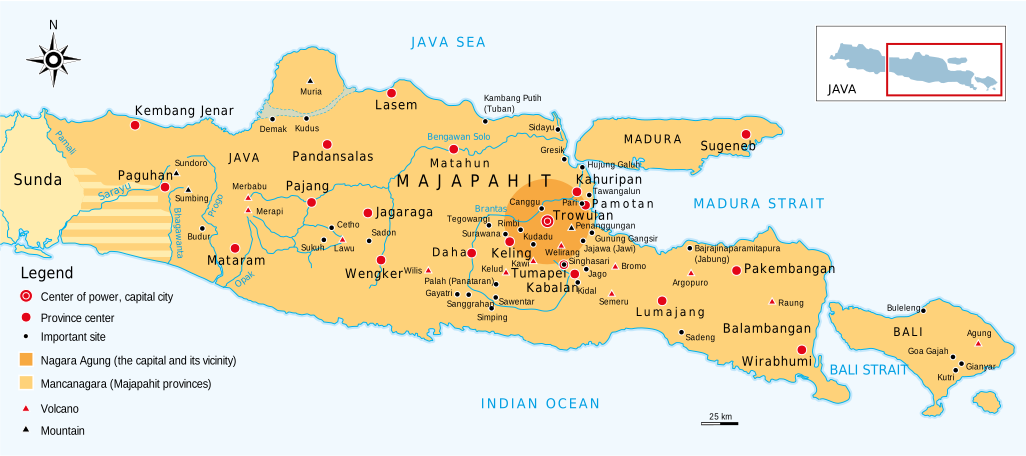
In the Malay Annals, Hang Tuah wins the keris Taming Sari after defeating a Majapahit warrior who carried that name; the blade then becomes the mark of his standing at court. 5,4
What is interesting is where the keris went after the story ended.
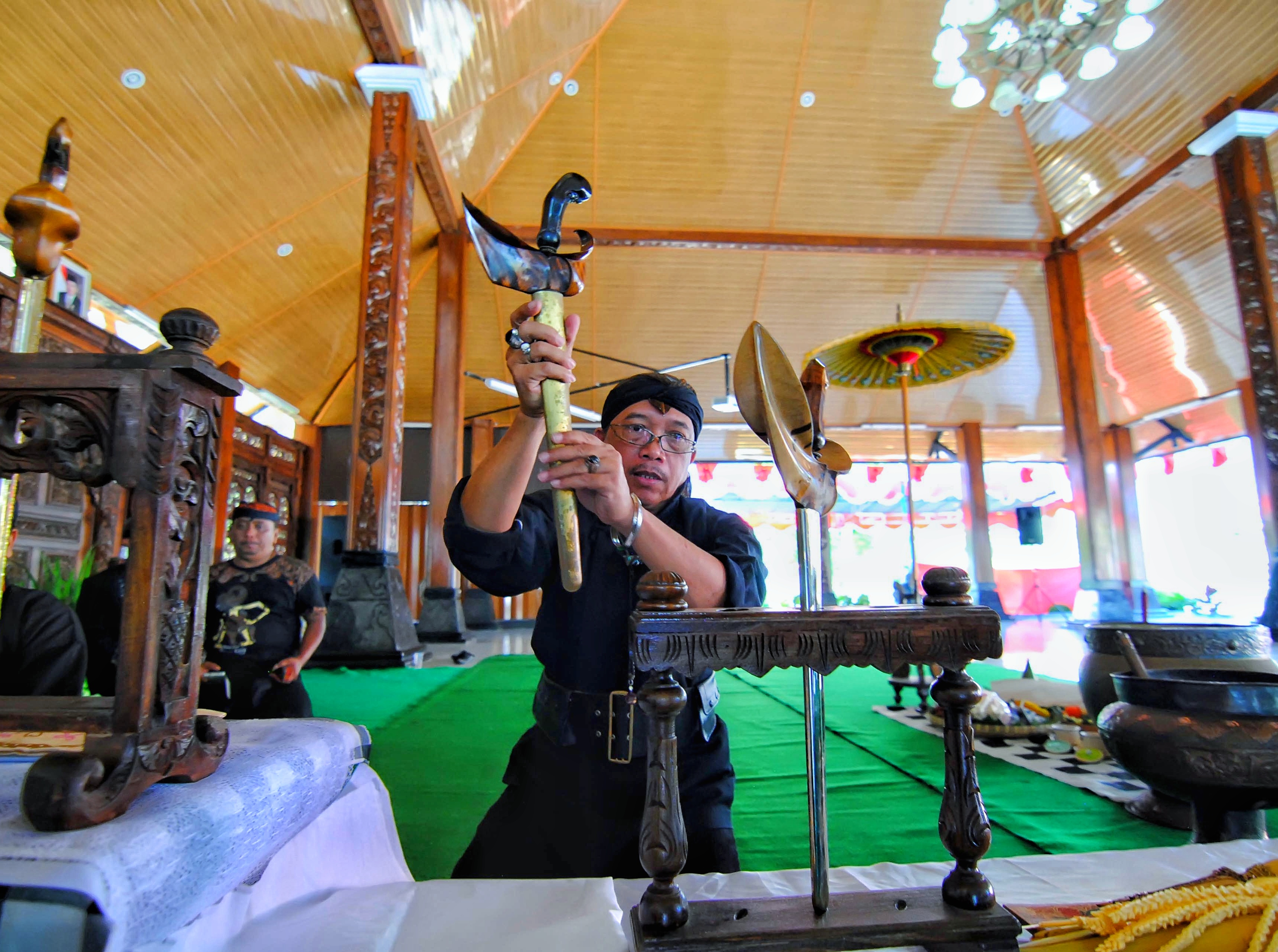
Today a keris named Taming Sari does exist — not in Malacca, but in Perak. The Office of the Sultan of Perak lists it among the state regalia and gives this account: when Malacca fell to the Portuguese in 1511, Sultan Mahmud Shah withdrew and handed the regalia, Taming Sari among them, to his son Muzaffar Shah, who became the first Sultan of Perak. 7,8
The keris is not on daily display. It is shown to the public once a year, in the month of the Sultan's birthday, at the Galeri Sultan Azlan Shah in Kuala Kangsar. 7,8
It is worth being precise about what this proves and what it does not. It proves that a royal house has kept, maintained and named a keris after the legend for centuries. It does not prove that the blade in Kuala Kangsar is the one held by a fifteenth-century admiral — no metallurgical or archaeological study in the public record links the two. A legend and an object can share a name without sharing an origin.
When a Historian Said: Take Him Out of the Textbook#
In January 2012, Professor Khoo Kay Kim, a historian then serving on the Education Ministry's committee reviewing the history curriculum, proposed that the stories of Hang Tuah, his four companions and Princess Hang Li Po be removed from school history textbooks. His reason: no contemporary written record confirms that they existed; they belong to the literature of storytellers, not to history that can be verified. 9,10,2
He pointed to the same gap this chapter points to: Ming records mention no princess married to a Sultan of Malacca, and the Portuguese, Chinese and Indian sources that describe Malacca's politics in some detail do not mention the five names. 9,10,2
The proposal drew wide protest. Idrus's study records disputes of this kind as part of a longer public argument about Hang Tuah's place in official narrative and in education. 9,10,2 As far as the public record can be checked, no written ministry statement accepting or rejecting the proposal can be found; what remains is one committee member's view and the wave of reaction to it.
What the Legend Leaves#
The Hang Tuah story can be told in an engaging way: learning martial skills, entering the palace, becoming a messenger, acquiring Taming Sari, confronting Majapahit, and fighting Jebat.
However, legend also serves as a place where society keeps its problems. The Hang Li Po tale carries an image of Chinese acknowledgement of Malacca. The Hang Tuah tale holds a question about a servant’s loyalty. The dispute over his lineage, in turn, reflects the anxieties of modern Malaysians about place, dignity, and ownership.
When Portuguese cannons thundered, the legendary hero did not manage to save the city. The story remains alive.
Sources 10 Every important claim here can be checked. Open it and see.
Do not trust this site. Check it — every source below is clickable.
-
Search for this source ⌕ no direct link — this button searches for the work 2026-08-02 Report this source
This site is written with AI assistance. Please check us.
AI can invent citations that look completely convincing — a real author's name, a plausible title, a sensible year, for a work that does not exist. This is not a theoretical risk; it is a known failure mode. That is why every source on this site is clickable. If a reference cannot be found anywhere, it may well not exist — and we want to know.
How to check us →
Reader Comments
Be the first to share your thoughts.