How Did the Malay Rulers Enter the Modern Federation? Royal Power, Conference, and Constitutional Limits
Independence did not sweep old royal power away; it rewrote it into a system that rotates, meets, and is limited by the Constitution
On the day of independence, Malaya did not become a republic.
Nor did it return to the old kingdoms.
It took a third road.
The nine rulers remained.
The elected government remained too.
The British were leaving.
The federal state had to stand.
So the Constitution had to do something difficult: put old royal power into a modern system.
It could not let royal power stand outside the Constitution.
It also could not let the Constitution erase it entirely.
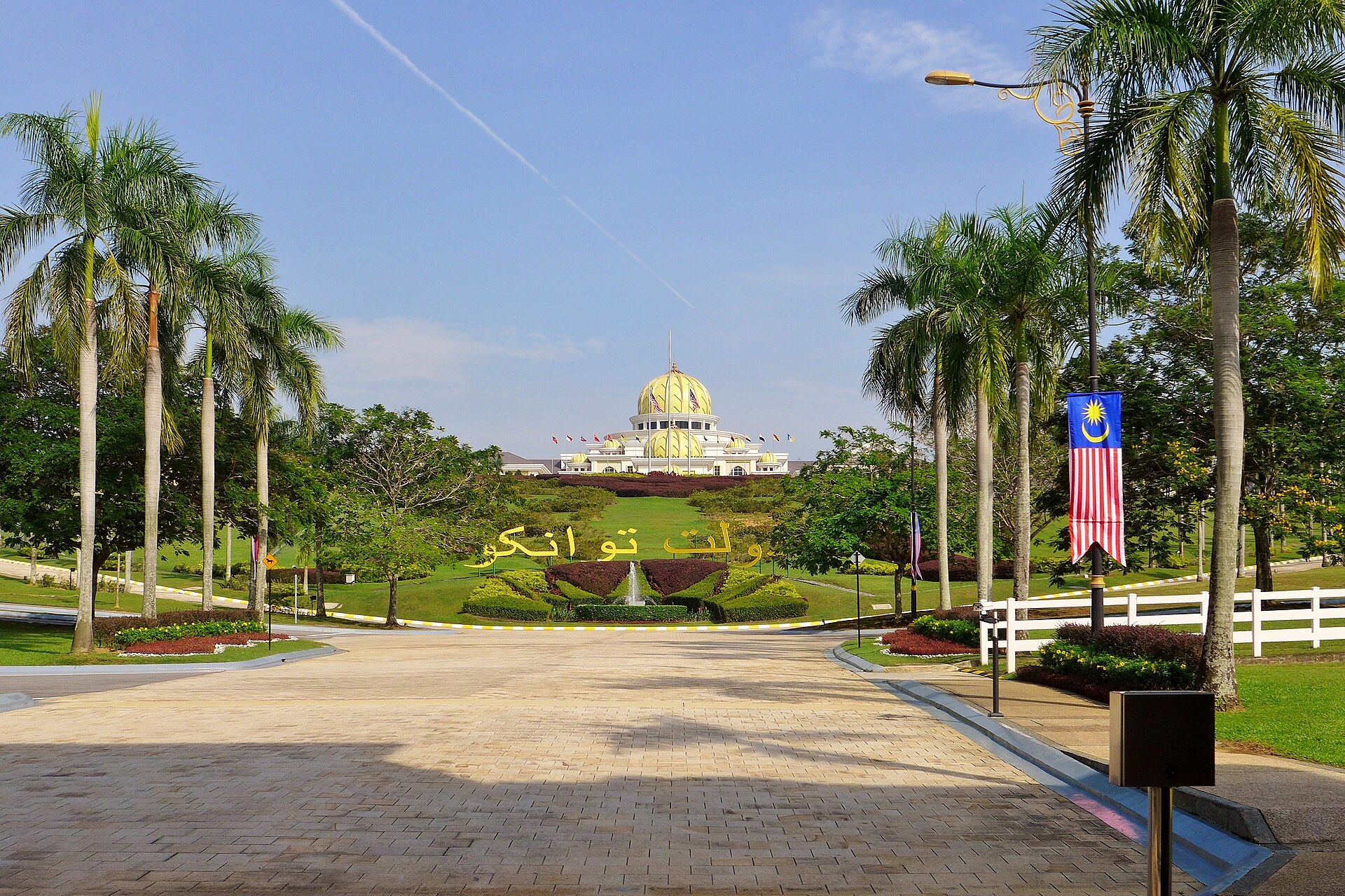
The Yang di-Pertuan Agong: Not a Hereditary Emperor#
Article 32 writes the Yang di-Pertuan Agong into the Constitution.
He is the Supreme Head of the Federation, elected by the Conference of Rulers for a term of five years.1,3
Those few words fasten the old world to the new.
The office of Supreme Head carries the ceremonial height of royal power.
But the phrases "elected by the Conference of Rulers" and "five-year term" pull it away from the logic of a single hereditary emperor.1,3
This is not an ordinary republican president.
It is not a single European-style royal house either.
It is Malaya's own combination:
the rulers of nine states take turns entering the highest federal symbol.
Old royal power does not disappear.
But it enters a system that rotates, expires, and is arranged by the Constitution.
The Conference of Rulers: An Old Durbar in a New Body#
If you remember an earlier chapter on the British colonial period, Swettenham once described the limits of the early ruler meetings: they were advisory, and could not make decisions for the states.
In the independence Constitution, the Conference of Rulers was no longer merely a gathering under colonial administration.
Article 38 writes it as a constitutional institution. It has the power to elect the Yang di-Pertuan Agong and the Deputy Yang di-Pertuan Agong; in certain matters involving rulers' privileges, position, honours, religious customs, and related questions, it also has functions of consent or consultation.1,3
That is the change.
Under the British, rulers were invited to listen and give views.
In the independence Constitution, they were placed at certain key points in the machinery of the state.
They could not govern the whole Federation alone.
But the Federation could not pretend they did not exist.
Article 181: Old Power Was Not Cleared Away by One Sentence#
Article 181 is another key.
It says that, unless the Constitution provides otherwise, the sovereignty, prerogatives, powers, and jurisdiction of the rulers within their states are not affected.1,3
That sentence looks like protection.
It is protection.
But it does not place the rulers outside the Constitution.
Because there are words before it:
subject to the provisions of this Constitution.
Limited by the Constitution.1,3
So the real meaning of Article 181 is not that old power remains unchanged above the modern state.
Nor is it that old power was completely swept away by the independence Constitution.
It writes a transformation:
preserved.
But preserved inside the Constitution.
Why This Piece Could Not Be Missing#
Without the rulers, Malaya's independence negotiations would have been difficult to bring together in this form.
The Malayan Union crisis of 1946 had already shown that if the British tried to rewrite the rulers' sovereignty too quickly and too harshly, there would be strong resistance. The rise of UMNO later was, in large part, built around opposition to the Malayan Union and the protection of the sultans' position.2,1
By the time the Constitution was drafted, the question was not "should the rulers be recognised?"
The question was: how?
If recognition went too far, elected government would be pressed down by old royal power.
If recognition went too lightly, Malay society and the rulers themselves would not feel secure.
So the Constitution designed a double structure.
Everyday government would run through the Cabinet and elected politics.
National symbols, certain reserved powers, religion, and the position of the rulers would be placed elsewhere in the Constitution.1,2
This was the institutional compromise of Malayan independence.
Royal Power Was Changed Too#
Many people think the Constitution only protected royal power.
That is only half right.
The Constitution also changed royal power.
Before, each ruler mainly faced his own state, his own court, his own subjects, and his own British adviser or resident.
After independence, they also sat together inside a federal system.
They elected the Yang di-Pertuan Agong.
Through the Conference of Rulers, they handled certain constitutional matters.
Their position inside their states was preserved, but that preservation was written into the federal Constitution.1,3
That means old power was put into a new container.
The container protects it.
It also limits it.
Democracy Did Not Fall from the Sky Either#
We must also be careful not to tell modern democracy as though it fell from the sky.
Malaya was not first an empty field, with a country built on it later.
This land already had states.
Royal houses.
Religious authority.
Colonial administration.
Communal parties.
Emergency rule.
Cold War pressure, with Britain wanting to withdraw but afraid to withdraw carelessly.
The Constitution was not designed on empty ground.
It opened a new road inside older structures.
That is why we see so many mixtures.
An elected Parliament.
A royal symbol.
The Conference of Rulers.
Federation and states.
Religion and secular administration.
Tradition and modern law.
Put together, these things can easily rub against one another.
But without these compromises, the country might not have stood in 1957.
Sitting Inside the State#
So the nine rulers were not left outside history's door.
They sat inside the state.
But once inside, they were no longer only rulers from the old world.
They became part of the modern Constitution.
That is what makes Malaysia's monarchy unusual.
It does not simply preserve tradition.
It does not simply cut tradition off either.
It institutionalises tradition.
Once institutionalised, tradition has a place.
It also has a boundary.
The Evidence for This Chapter#
The core clauses come from the AGC Federal Constitution. This chapter uses Article 32, Article 38, and Article 181 to explain the constitutional position of the Yang di-Pertuan Agong, the Conference of Rulers, and the existing powers of the rulers.1,3
The Reid Report is used only as constitution-making background. This chapter does not write unverified meeting dialogue, and does not guess the personal intentions of any ruler. It writes only institutional arrangements and visible political pressure.2,1
This chapter avoids personal evaluation. Under this site's editorial policy, this chapter discusses the institution only, and does not comment on any ruler as an individual.
This chapter is marked sensitive: true. Before publication, sentences involving the rulers, royal power, elected government, and constitutional limits must be reviewed by Jay line by line.
Sources 3 Every important claim here can be checked. Open it and see.
Do not trust this site. Check it — every source below is clickable.
This site is written with AI assistance. Please check us.
AI can invent citations that look completely convincing — a real author's name, a plausible title, a sensible year, for a work that does not exist. This is not a theoretical risk; it is a known failure mode. That is why every source on this site is clickable. If a reference cannot be found anywhere, it may well not exist — and we want to know.
How to check us →

Reader Comments
Be the first to share your thoughts.