How Does Malaysia's Executive Power Work? The Yang di-Pertuan Agong, Cabinet, and Prime Minister
The Constitution writes executive power in the name of the Yang di-Pertuan Agong, but everyday politics must run through the Cabinet and Prime Minister
After royal power sat inside the Constitution, the country still could not run by itself.
Because every day, the state has to do things.
Sign papers.
Hold meetings.
Send officials.
Collect taxes.
Enforce laws.
Handle crises.
Appoint ministers.
Answer Parliament.
These things cannot be done by ceremony alone.
The Constitution had to answer a very practical question:
who starts the state moving?
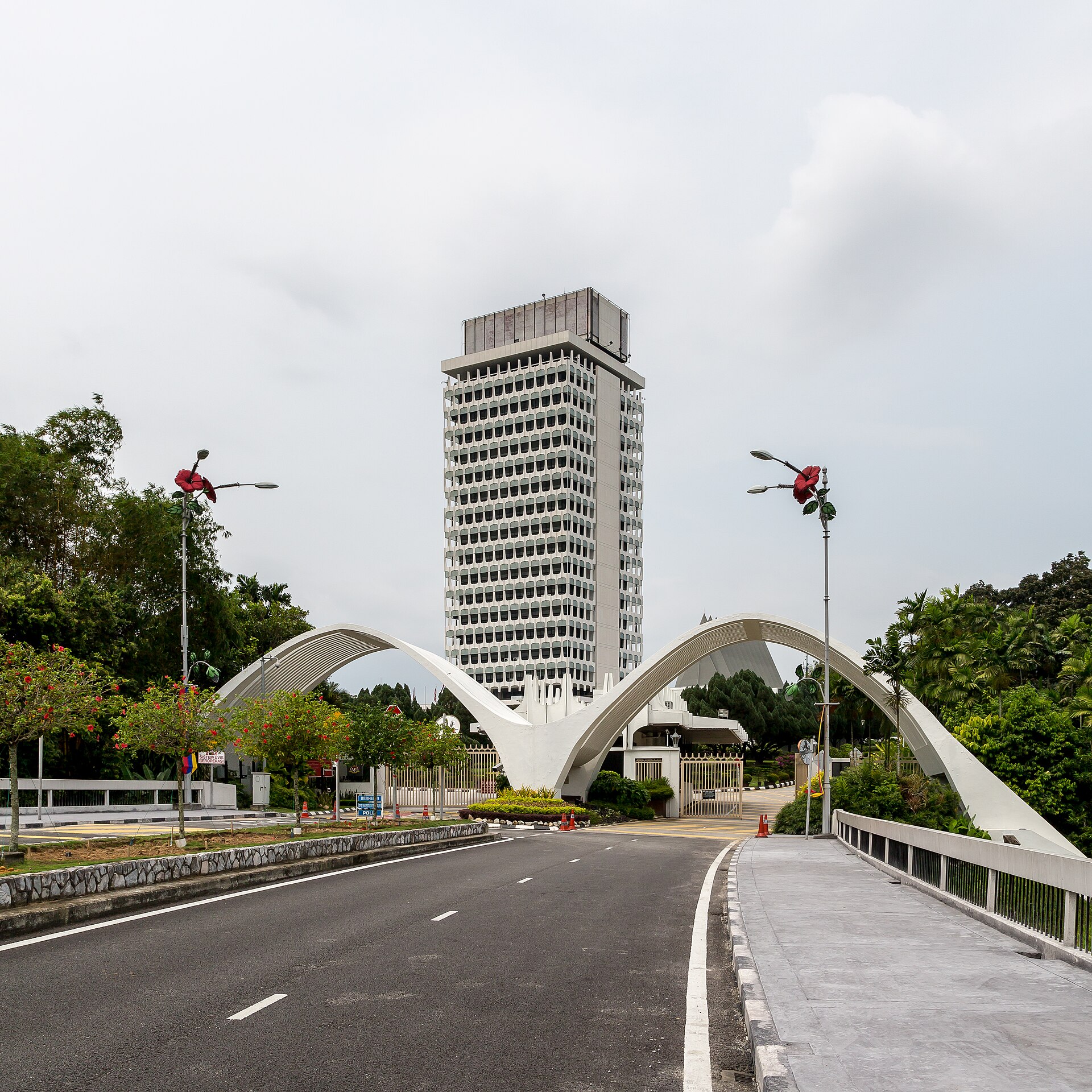
Power in Name#
Article 39 first writes the answer at the highest point.
The executive authority of the Federation is vested in the Yang di-Pertuan Agong.1,2
This sentence continues the logic of the previous chapter.
The Yang di-Pertuan Agong is the highest federal symbol.
In wording, executive power begins there too.
But Article 39 does not stop there.
It goes on to explain that this executive authority may be exercised by the Yang di-Pertuan Agong himself, the Cabinet, any minister, or persons authorised by law.1,2
That is the key.
The Constitution places power at the top.
Then it hands daily execution to the machinery of government.
The Word Advice#
What really makes the machine move is Article 40.
The core of Article 40 is that when exercising his functions, the Yang di-Pertuan Agong usually has to act according to the advice of the Cabinet or an authorised minister; only certain matters expressly stated in the Constitution fall within discretion.1,2
The word is small.
Advice.
Nasihat.
But in a constitutional system, it is not advice in the ordinary sense of casual conversation.
It is the transmission belt of responsible government.
Power in name sits with the Yang di-Pertuan Agong.
Political responsibility sits with the Cabinet.
If a policy goes wrong, Parliament and voters do not question the Yang di-Pertuan Agong every day.
They question the government.
That is the central gesture of modern constitutional monarchy:
royal power preserves the form of the state.
Government carries the daily responsibility.
Cabinet: The Room That Actually Decides#
Article 43 writes the Cabinet into place.
The Yang di-Pertuan Agong appoints the Prime Minister; the general structure is that he appoints as Prime Minister a member of the Dewan Rakyat who in his judgment is likely to command the confidence of the majority, and on the Prime Minister's advice appoints the other ministers.1,2
These sentences connect election results to executive power.
The people elect members of Parliament.
The parliamentary majority decides who can stand.
The Prime Minister forms the Cabinet.
The Cabinet runs daily government.
So executive power does not fall from the sky.
It travels in a circle:
voters.
Dewan Rakyat.
Prime Minister.
Cabinet.
Federal executive authority in the name of the Yang di-Pertuan Agong.
If that circle breaks, the country enters crisis.
Why It Was Designed This Way#
Because Malayan independence was not trying to do two mutually exclusive things.
It was not only trying to preserve royal power.
It was not only trying to transplant Westminster either.
It had to connect the two.
The direction designed by the Reid Commission was to build responsible government within a constitutional monarchy: the rulers and the Yang di-Pertuan Agong had constitutional positions, while everyday administration was handled by the Cabinet.3,1
This structure allowed several political needs to be placed at once.
The rulers were not removed.
Elected government could operate.
The system of responsible cabinet government familiar to the British could be transplanted.
The Alliance government could also tell voters: after independence, the palace would not govern alone; an elected majority would form the government.
Discretion Is Not Everyday Rule#
Article 40 also preserves certain discretionary powers.1,2
This must be said.
Because if there were no discretion at all, the Yang di-Pertuan Agong would be reduced to a rubber stamp.
But discretion also cannot be enlarged into everyday governing power.
Otherwise, responsible government would be hollowed out.
The design of the Constitution lets the Yang di-Pertuan Agong keep room for judgment in specific constitutional situations, while placing daily political responsibility on the Cabinet.1,2
That is the boundary.
When the boundary becomes blurred, political crisis appears.
The Sound of the State Machine#
So you see, the Constitution does not write only identity.
It does not write only language.
It does not write only religion.
It also writes a machine.
This machine has a symbolic head.
It has political arms.
It has ministers.
It has a parliamentary majority.
It has advice.
It has responsibility.
A new country cannot live on historical memory alone.
It must also be able to open for work on Monday morning.
Articles 39, 40, and 43 are the few shafts that let it open for work.1,2
The Evidence for This Chapter#
The core clauses come from the AGC Federal Constitution. This chapter uses Articles 39, 40, and 43 to explain executive authority, advice, the Cabinet, and the Prime Minister.1,2
The Reid Report is used only as institutional background. This chapter does not invent the inner thoughts of constitution-makers and does not write unverified negotiation details. It only reads responsible government and constitutional monarchy together.3,1
This chapter does not discuss later appointment crises or coup controversies. Those involve specific people and recent politics, and need separate chapters with fresh verification.
Sources 3 Every important claim here can be checked. Open it and see.
Do not trust this site. Check it — every source below is clickable.
This site is written with AI assistance. Please check us.
AI can invent citations that look completely convincing — a real author's name, a plausible title, a sensible year, for a work that does not exist. This is not a theoretical risk; it is a known failure mode. That is why every source on this site is clickable. If a reference cannot be found anywhere, it may well not exist — and we want to know.
How to check us →
Reader Comments
Be the first to share your thoughts.