Why Did Abdullah Hand Over Early? The Last Wave Outside the Prime Minister's Office
How the biggest mandate of 2004 became an internal party squeeze after 2008, and what a man called a failure still left behind
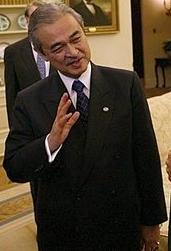
On 3 April 2009, one photograph remained outside the Prime Minister's Office in Putrajaya.
Abdullah stood in front, raising his hand to wave beyond the camera. Najib, newly sworn in, stood behind him. The photograph did not capture a defeated election, because Abdullah had not lost the federal government. It captured another kind of departure: a prime minister who still held a parliamentary majority, but whose own party had run out of patience first. 1,2,3
Five years earlier, Barisan Nasional had won 198 out of 219 seats. Five years later, what pushed Abdullah out was not a no-confidence motion. It was the gap left behind by that earlier victory.
No Government Fell, Yet Power Was Lost#
After the 2008 general election, Barisan Nasional still held 140 seats and could legally govern. But it lost its two-thirds majority. It also lost Penang, Kedah, Perak and Selangor, while Kelantan remained under PAS. 1,2
For voters, this was punishment for reforms that had not arrived, for the cost of living, and for long-running political arrogance.
For UMNO, the question was more direct: who should answer for losing the supermajority?
Mahathir attacked the successor he himself had chosen from outside the party. Inside UMNO, voices also pressed for a shorter handover timetable. Abdullah did not leave immediately at first. In the end, he chose not to contest the party presidency, and in April 2009 handed the premiership to his deputy, Najib. 2,3
Before Leaving, He Built Two Doorframes#
The most important police oversight proposal under Abdullah was not fully delivered, and his anti-corruption promises did not end money politics. Yet near the end of his term, he pushed the creation of the Malaysian Anti-Corruption Commission and built a legal framework for the Judicial Appointments Commission. 2,4,5
These institutions would later still be criticised for not being independent enough. Creating a commission does not mean executive power has already let go.
But "not enough was done" and "nothing was done" are not the same sentence.
In February 2009, Abdullah's speech launching the MACC listed the new law, advisory boards, a complaints committee, and a special anti-corruption committee. Less than six weeks later, he left the Prime Minister's Office. 4,3
That is the most contradictory picture of the Abdullah years: the doorframe was finally fitted, but the person holding the key had changed.
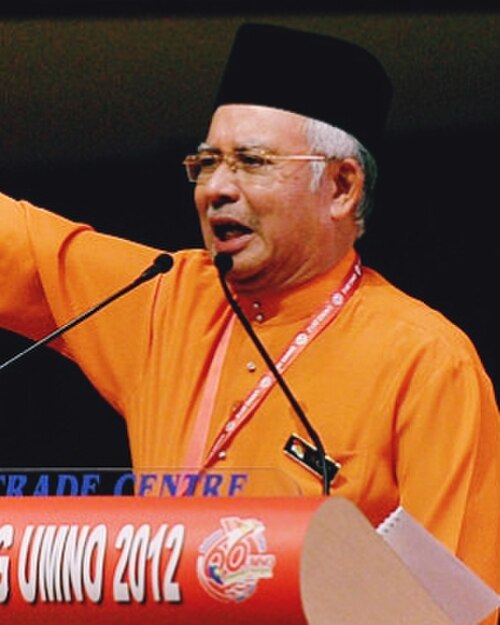
After Abdullah waved goodbye, the other man in the photograph took one step forward.
His surname had entered national politics before he was born. His father was one of the builders of the New Economic Policy and the Barisan Nasional order.
Sources 5 Every important claim here can be checked. Open it and see.
Do not trust this site. Check it — every source below is clickable.
This site is written with AI assistance. Please check us.
AI can invent citations that look completely convincing — a real author's name, a plausible title, a sensible year, for a work that does not exist. This is not a theoretical risk; it is a known failure mode. That is why every source on this site is clickable. If a reference cannot be found anywhere, it may well not exist — and we want to know.
How to check us →

Reader Comments
Be the first to share your thoughts.