Why Did the 2018 Election Change Government?
Mahathir Returns to the Forefront, Anwar Still in Prison, and the Night the 61-Year Rule Ended
Late on the night of May 9, 2018, the question was no longer how many seats Barisan Nasional would lose.
It was whether it would lose the federal government for the first time.
Pakatan Harapan contested under a shared PKR logo in most areas of the Peninsula; while DAP in Sarawak used its own logo. When vote counting concluded, the parties forming Pakatan Harapan won 113 seats, Barisan Nasional 79, and PAS 18; Parti Warisan Sabah, allied with Pakatan Harapan, won another 8 seats. 1,2
From the Alliance Party to Barisan Nasional, the same political system was voted out of the central government for the first time since independence.
The Two Most Unlikely Men Stood on the Same Side#
Pakatan Harapan's prime ministerial candidate was 92-year-old Mahathir.
Anwar was still serving his prison sentence, and his party was the largest pillar of the coalition. The man who fired and the man who was fired twenty years ago did not truly erase their history; what they reached was a political arrangement: Mahathir would first lead the transition, and Anwar would take over in the future after his release. 1,3
This arrangement simultaneously broadened the coalition and planted a ticking clock within the government.
Mahathir helped Pakatan Harapan penetrate previously out-of-reach Malay constituencies, using his status as a former UMNO leader to convince hesitant voters that changing the government did not equate to the collapse of the nation or Malay political status. Anwar's camp provided the reform movement, multi-ethnic parties, and a long-standing opposition network. 2,3
The two forces needed each other to win.
However, their understanding of the transition timeline, Bumiputera policies, government power, and the old system were never entirely the same.
Why Did Corruption Not Immediately Cut the Umbilical Cord?#
We must be careful here.
Malay support for UMNO cannot be written as an inborn trait. Nor should UMNO voters be portrayed as people who do not understand or care about corruption.
A closer picture is that many voters held two ledgers in their minds at the same time.
One ledger recorded 1MDB, luxury goods, debt, abuse of power and elites taking too much.
The other asked: if this safety net collapsed, who would protect the position of the Malays, the position of Islam, rural allocations, civil-service opportunities, university places, contractors' livelihoods, mosques and religious institutions? 2,4
For the urban middle class, corruption may have been the first door. For some rural and semi-urban Malay voters, corruption was still wrong, but losing protection felt more frightening.
UMNO politicians understood this. They presented the party not as an ordinary political organisation, but as the wall around Malay society.
The wall certainly had termites. Yet voters were asked: should you repair the termites first, or tear down the entire wall?
That is the deceptive force of a political narrative. It does not require voters to believe corruption is good. It only requires them to believe that an opponent taking power is more dangerous than corruption.
In her analysis of the 2018 election, Bridget Welsh observed that fear had long been an important part of Barisan Nasional campaigning. In 2013, messages about "Malay political displacement" were used to deter support for the opposition, while the presence of many Chinese participants at large opposition rallies was used to stir fears that Malay rule would be replaced. 2,4
UMNO was not the only party able to do this. Any ethnic politics can turn insecurity into votes. Non-Malay parties can also warn supporters that their schools, language or commercial space will be taken away if the party loses.
The difference was that UMNO controlled the state machinery for decades. It could connect that insecurity to allocations, permits, universities, posts, government contracts and rural networks. Supporting the party was therefore not merely a choice of values; it could feel like buying insurance. 2,3
Not Indifferent to Corruption, but Afraid of Choosing the Wrong Replacement#
In 2018, enough voters decided that this insurance had become too expensive. They removed Barisan Nasional.
But this did not mean Malay political psychology changed overnight into "vote for whoever opposes corruption." A more common response was to seek another party that still promised Malay protection once UMNO was judged to be broken.
That is why, after 2022, many Malay votes neither returned to UMNO nor moved in large numbers to Pakatan Harapan, but instead went to Perikatan Nasional, Bersatu and PAS. An ISEAS analysis of the fifteenth general election found that ethnicity remained a major factor in voting preferences; Malay voters split between BN and PN, while Malay support for PH remained low. It also found that corruption cases involving UMNO leaders created a trust deficit, but many Malay voters still did not regard PH as a choice that represented their ethnic interests. 5,3
The question is therefore not simply why they still supported UMNO. The deeper question is why, even when punishing UMNO, they were often unwilling to give their vote to a coalition seen as non-Malay dominated.
The answer is not moral intelligence. It lies in long-term political education.
For decades, UMNO taught Malay voters a worldview: on the surface, this country is a plural democracy, but underneath it is an ethnic defensive struggle that must never be lost. As long as that story survives, corruption will not automatically destroy UMNO. It will only force voters into a painful choice between "a corrupt protector" and "a reformer who does not seem to protect me."
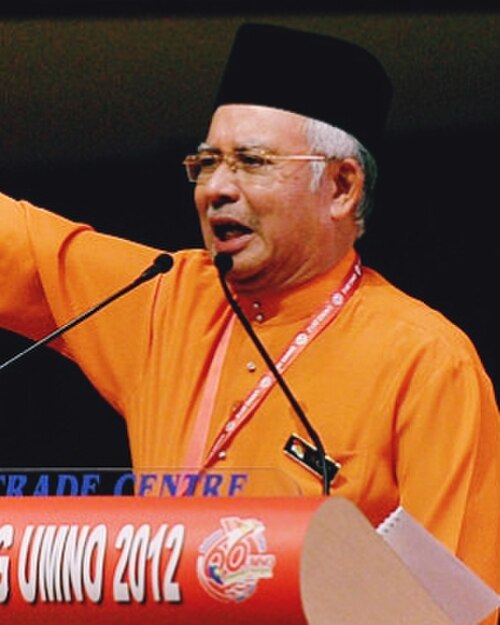
On May 10, Mahathir was sworn in as the seventh Prime Minister. Anwar later received a full royal pardon and was released from prison, while Wan Azizah became the first female Deputy Prime Minister. 1,2
The transition proved something of monumental importance: the Malaysian government could be changed via the ballot, and the nation did not stop functioning because of it.
But election night did not automatically open every ledger.
The new government would next review 1MDB, government debt, and look into an institution safeguarding the savings of Muslim pilgrims. There, a warning letter from Bank Negara and records of up to a thirteen-month bonus were waiting to be placed on the same table.
Sources 5 Every important claim here can be checked. Open it and see.
Do not trust this site. Check it — every source below is clickable.
-
View excerpt ↓
ethnicity remains the key underlying factor determining voters' political choices
This site is written with AI assistance. Please check us.
AI can invent citations that look completely convincing — a real author's name, a plausible title, a sensible year, for a work that does not exist. This is not a theoretical risk; it is a known failure mode. That is why every source on this site is clickable. If a reference cannot be found anywhere, it may well not exist — and we want to know.
How to check us →

Reader Comments
Be the first to share your thoughts.