Why DAP Can Govern Penang for So Long? From the 2008 Transition to New Ethnic Frontiers
Gerakan loses all seats and Lim Guan Eng takes over; fifteen years later, PH remains, but new waves arise in the Malay areas
On the night of 8 March 2008, Penang’s vote count delivered a result that left almost no room for uncertainty.
The DAP won 19 seats, the PKR nine and the PAS one – a total of 29.
Gerakan, MCA and MIC failed to win any seats. All 11 BN seats that survived were taken by UMNO. 1,2
Misunderstandings That Easily Arise the Next Day#
Many said, “DAP has taken Penang.” That statement was only half true.
The DAP was indeed the largest party in the new government, and Lim Guan Eng became Chief Minister. However, 19 seats were not enough to control the 40‑seat State Assembly. The transfer of power was made possible because the DAP, PKR, and PAS avoided contesting against each other before voting, then combined their 29 seats into a majority. 1,2,3
This difference is crucial to understanding ethnic relations. The DAP’s strength was largely concentrated in city seats with a Chinese majority, while the PKR and PAS brought more representatives from mixed and Malay areas. A Chief Minister of Chinese ethnicity does not mean the government was formed solely by Chinese votes; at the same time, the DAP’s difficulty in winning many Malay seats illustrates a real structural boundary. 1,3,4
Why It Did Not End as a One‑Time Protest Vote#
The DAP did not receive a clean sheet. The free trade zone, electronics industry, Penang Development Corporation, and skilled workforce were foundations built by Lim Chong Eu and the Gerakan administration. The new government retained these assets, continued investment, and expanded industrial estates such as Batu Kawan. The CAT system—efficient, accountable and transparent—made administrative efficiency and fiscal discipline its political brand. 5,6,7
A mature transition did not require all of the old government's work to be branded negative. The DAP’s longevity was partly due to inheriting functional institutions and convincing voters that those institutions could be managed more openly and effectively. 3,5
After 2008, BN also long failed to offer a convincing alternative. Gerakan lost its local organisations and resources, MCA was also weakened, while UMNO struggled to reclaim Chinese and Indian urban voters on its own. There were votes against the state government, but they did not automatically translate into a majority coalition. 1,2,3
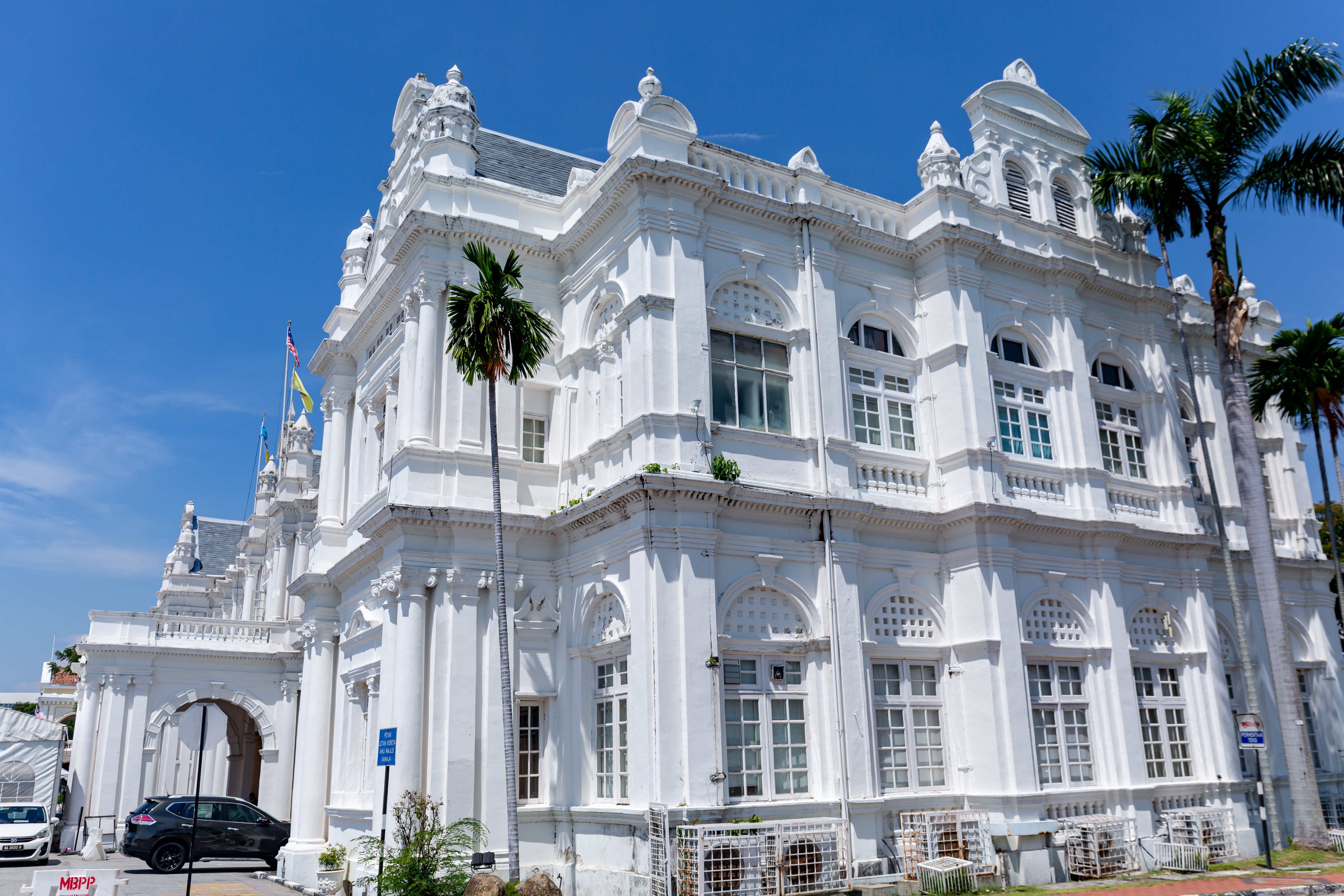
A Chinese Chief Minister Does Not Mean Penang Is Only for the Chinese#
Penang has no sultan and its former Chief Minister role was held by a Chinese leader, making it highly salient in the nation’s political imagination.
The reality of the populace is not a “Chinese island.” The 2020 Census shows that the Malay and Chinese populations in the state are almost equal. Many Seberang Perai areas are Malay majorities, and the Indian community forms a significant minority. The urban experience in George Town does not represent the entire state. 3,4
The new government maintained a multi‑ethnic administrative structure, including a deputy Chief Minister that was the first Malay and a second deputy that was Indian. However, the position does not necessarily resolve real experience.
Rising house prices and land scarcity on the island can create class pressures that push Malay families toward Seberang Perai, which may then be understood as ethnic displacement.
Conflicts over land reclamation also take on an ethnic dimension when many affected fishing settlements are Malay villages. For the Indian community, high office carries symbolic weight, but disputes involving estates, Hindu temples and housing show that visible representation does not guarantee bargaining power for every vulnerable community. 5,6,8
Therefore, it is irresponsible to keep proclaiming that “Malay people are marginalised by DAP,” or conversely to claim that budget allocations prove no one feels excluded. The first requires evidence of policy and distribution; the second ignores the real impact of house prices, regional development and political representation.

In 2023, the Map Became Two Colours#
DAP and its partners continued to govern after the 2013 and 2018 elections. In 2023, PH won 27 seats, and with two BN seats it maintained a total of 29; PN won 11 seats, with a main swing in areas with more Malay voters. 1,9
The map rejects two excessive claims. DAP did not lose Penang, so the story that all ethnicities have risen to overthrow the “Chinese government” is not true. However, the 11 PN seats also show that long‑term governance has not surpassed ethnic politics. What exists is a strong coalition government alongside clearer ethnic and geographic salients. 1,3,9
That Wave Left Salients Elsewhere#
The Penang transition is clear: 29 seats were enough to take the oath. MCA lost its voters and then fought among themselves over who was fit to lead the renewal.
Sources 9 Every important claim here can be checked. Open it and see.
Do not trust this site. Check it — every source below is clickable.
This site is written with AI assistance. Please check us.
AI can invent citations that look completely convincing — a real author's name, a plausible title, a sensible year, for a work that does not exist. This is not a theoretical risk; it is a known failure mode. That is why every source on this site is clickable. If a reference cannot be found anywhere, it may well not exist — and we want to know.
How to check us →


Reader Comments
Be the first to share your thoughts.