Why Did Gerakan Leave Penang? From the Rebel Outrage to the 39‑Year Decline
Lim Chong Eu swapped rice paddies for industrial zones and Koh Tsu Koon kept the state for 18 years; the party’s image of a reformer has faded further
On 10 May 1969, the 24 seats of the Penang State Legislative Assembly began to be filled one by one.
Gerakan secured sixteen.
The party, barely over a year old at the time, was neither a member of the Alliance nor a newcomer to the old ethnic parties. Under a single banner, Lim Chong Eu, Wang Gungwu, Syed Hussein Alatas, Tan Chee Khoon, along with other labour‑movement figures, sought to challenge the Alliance with multiracial politics and social justice. 1,2,3
Penang voters truly turned the state government over to it. That victory proved that before 13 May, a newly formed open party promoting multiracial politics could win state power through the ballot. 1,2
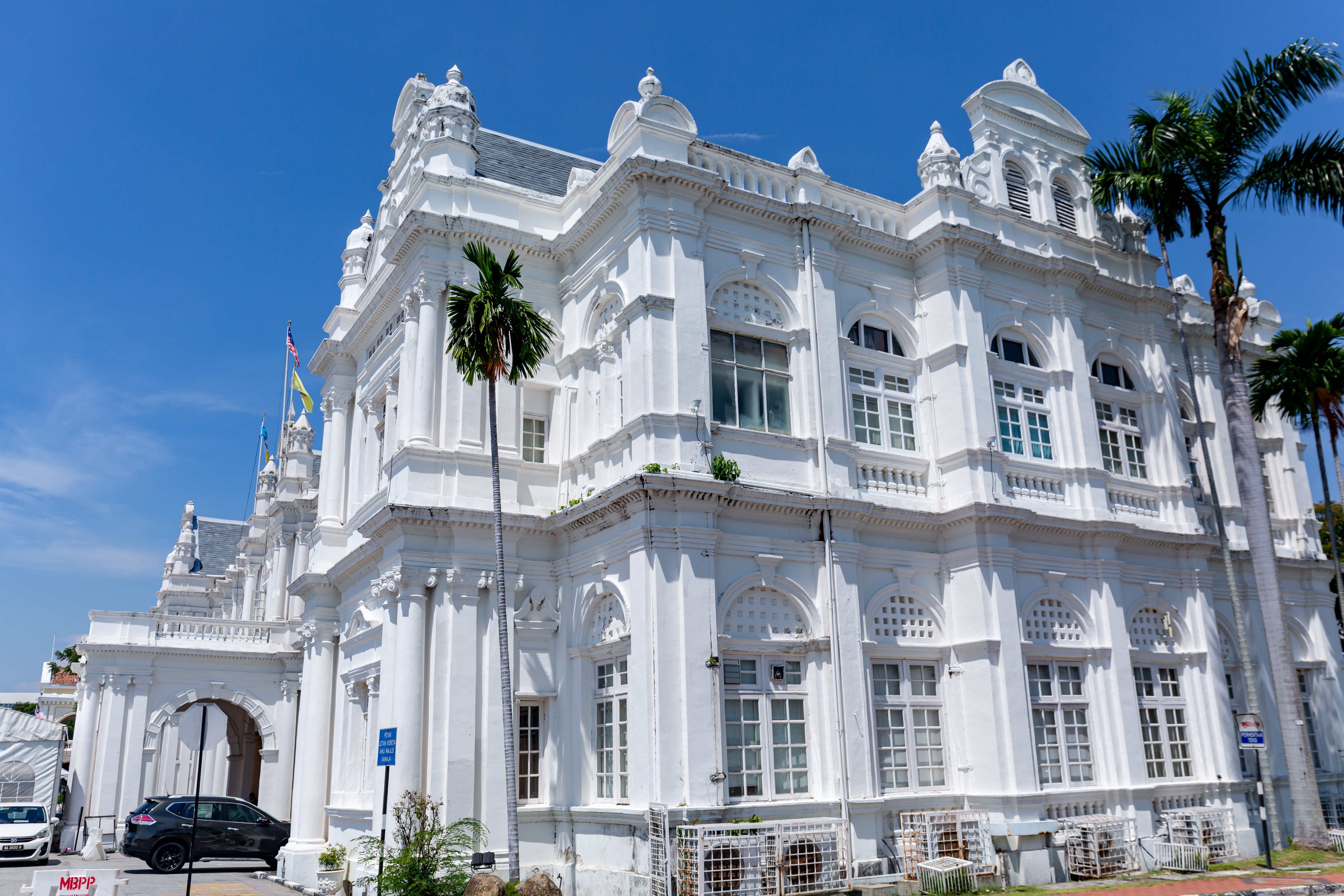
Lim Chong Eu did not turn Penang into a prosperous island#
Today Penang is easily imagined as a place of factories, tourism, and heritage buildings.
When Lim took power, the state had just lost its status as a free port. The entrepot trade had grown bleak, while unemployment and the future of the economy occupied the cabinet’s tables. 3,4
The answer lay in Bayan Lepas. Through the Penang Development Corporation, the state supplied land, built industrial estates, and attracted investors. In 1972, Malaysia’s first free‑port zone opened in Penang; Intel, AMD, Hewlett‑Packard, and Bosch were among the early multinational entrants. Factories sprouted beside rice paddies and coconut groves, bringing many women and young people into wage employment and linking the state to the global electronics supply chain. 4,5
These services could not be erased by later defeats. The government did not create all the conditions itself: federal tax incentives, global electronic industry transitions, cheap labour, and port talent all mattered. However, Lim’s administration saw the old economy ending and laid down the institutions and land needed for a new one. 4,5
For development, it returned to a coalition government#
In February 1972, Gerakan and the Alliance formed a coalition government in Penang. Gerakan then joined Barisan Nasional.
Supporters’ argument was practical: industrial estates, highways, housing, and investment required endorsement and central funding. A state opposition government after the Emergency found it hard to confront Kuala Lumpur relentlessly. 1,3,4
The cost was also real. Gerakan rose with the promise to replace the old order, but after joining that order, it had to prove it was still different. The party retained the chief minister’s post, but that did not necessarily mean it could set the direction of the entire coalition. 2,3
Lim Kit Siang knocked out Lim Chong Eu but did not seize the state#
In 1990, DAP launched Tanjong 2. Lim Kit Siang challenged Lim Chong Eu in Padang Kota and defeated the 21‑year incumbent with a majority of 706 votes. 3,4
DAP still failed to win a state majority. BN remained in power and Koh Tsu Koon became chief minister. That result was an early warning: voters still trusted BN with state administration, yet were ready to remove Gerakan's most accomplished leader. 3,4
Koh’s 18 years cannot be summed up by the word “weak.” Electronics, services, universities and tourism continued to grow. Yet traffic congestion, housing prices and land‑development disputes intensified; Gerakan was seen as unable to restrain UMNO, making it harder for urban voters to distinguish its political role from MCA. 3,6,7
In 1969, Gerakan asked: why can’t the government be changed?
In 2008, Gerakan had to ask: why must we be changed?
Thirty‑nine years vanished in one night#
On 8 March 2008, Gerakan lost every state seat it contested in Penang. It did not become a minority government or the largest opposition. It vanished straight from state politics. 6,7
Yet the same votes also toppled BN’s two‑thirds majority in Parliament. Penang’s defeat was just one of the clearest fractures that night.
Sources 7 Every important claim here can be checked. Open it and see.
Do not trust this site. Check it — every source below is clickable.
This site is written with AI assistance. Please check us.
AI can invent citations that look completely convincing — a real author's name, a plausible title, a sensible year, for a work that does not exist. This is not a theoretical risk; it is a known failure mode. That is why every source on this site is clickable. If a reference cannot be found anywhere, it may well not exist — and we want to know.
How to check us →

Reader Comments
Be the first to share your thoughts.