Who Is a Child of the Land?
When the timeline stretches to seventy thousand years, the answer cannot stop at any present-day community name
Some questions carry a trap inside the question.
"Who is a child of the land?"
The moment you rush to answer, you begin lining people up: who came first, who came later, who is more original, who is more foreign.
But pull the camera back a little, and the line falls apart.
Kota Tampan in the Lenggong Valley preserves traces of stone-tool work from about seventy-four thousand years ago; the same valley later yielded Perak Man. At that time there was no Malaysia, no Malays, no Chinese, no Indians, and none of the administrative boxes familiar in today's arguments.1,2
If "child of the land" means the first to arrive, then everyone arguing over the phrase today arrived late.
First layer: the land is older than community names#
This sentence is not meant to humiliate anyone.
It simply puts time back on the table.
The deep genetic separation of peninsular Negrito peoples from other populations reaches back tens of thousands of years; Aslian languages follow another, later story of southward movement and language shift. In other words, people, language, and administrative classification do not always share the same timeline.3,4,5
That is what the Orang Asli chapter already showed: language and people cannot be mixed carelessly.
JAKOA today divides the Orang Asli of the peninsula into three broad groups and eighteen peoples: Negrito, Senoi, and Melayu Proto. But linguistic classification does not line up neatly with that administrative table. Semelai, officially placed under Melayu Proto, speaks an Aslian language; Temuan, Jakun, Orang Seletar, and others belong to the Malayic branch.5,6
So the first answer is:
The history of this land is older than any ready-made community name.
That sentence does not cancel Malay.
It does not cancel Orang Asli.
It only stops us from pushing today's categories backward, as if they grew naturally from the soil.

Second layer: Malacca did not sort people by blood#
Now move the camera to the fifteenth century.
At Malacca's height, the port had four Syahbandar.
One handled Gujarat. One handled Coromandel, Bengal, Pegu, and Pasai. One handled Java, Maluku, Banda, Palembang. One handled China, Ryukyu, Chancheo, and Champa.9,10
This table is stronger than a slogan.
Pasai and Palembang were both in Sumatra, but they came under different port officers. Pasai sat in the Bay of Bengal route. Palembang sat in the Java Sea route. The key was not bloodline, and not what we now call "race". It was wind, trade route, and the sea lane by which you entered the port.9,10
This does not mean fifteenth-century people had no identity.
Of course they did: merchant communities, religion, language, place of origin, teachers, families, port networks.
But Malacca's most important institution did not measure them with a modern racial ruler.
Who you were began with which officer you reported to.
Third layer: the Constitution is not an archaeology book#
By independence, the problem had changed.
A country cannot manage citizens by wind direction.
It also cannot issue identity cards by asking who came first.
It has to write provisions.
Article 160(2) of the Federal Constitution defines Malay through professing Islam, habitually speaking Malay, conforming to Malay custom, and a Merdeka Day anchor through birth, residence, or descent. It also defines aborigine separately. Article 153 safeguards the special position of Malays and the natives of Sabah and Sarawak, while also safeguarding the legitimate interests of other communities.7,8
Notice the structure.
Malay is one door.
Aborigine is another door.
Sabah/Sarawak native is another set of doors.
Article 153 is not an archaeological judgment about who came first.
It is an institutional arrangement written into the constitutional compromise of independence.
Fourth layer: Bumiputera is a large word, not a master key#
Political language loves short words.
Bumiputera is one of them.
It has force. It enters policy, universities, scholarships, housing, shares, party speeches, and everyday arguments.
But the Federal Constitution does not write Bumiputera as one unified definition. It writes different thresholds in different provisions: Malay, aborigine, Sabah/Sarawak native, and the special position and legitimate interests in Article 153.7,8
So when "child of the land" becomes one large umbrella, people underneath it disappear.
Orang Asli disappear.
Sabah and Sarawak natives disappear.
The constitutional Malay threshold disappears too.
In the end, only a powerful word remains, easy to shout but not precise enough.
Fifth layer: citizenship gave us common ground#
The independence Constitution had another door that these arguments often forget.
Citizenship.
When the Reid Commission dealt with citizenship, the core question was not whose ancestors arrived first. It was how the new country would write long-settled people into a common nationality. Those born in the Federation on or after Merdeka Day would become citizens by law; those before Merdeka were dealt with through thresholds such as residence and language.8,7
Citizenship does not erase difference.
It gives difference a common ground on which to argue.
Without citizenship, non-Malays would merely be governed people, not necessarily people who helped decide the country.
Without Article 153, Malay society and Sabah/Sarawak natives would not automatically lose their anxieties over status, opportunity, and historical position.
Put together, these are the difficulty of the independence Constitution.
Using one to crush the other is not an honest reading.
So what is the answer?#
If you ask archaeology:
The earliest story of this land does not belong to any party slogan today. It lies in stone tools, caves, human remains, language shifts, and Orang Asli communities still alive today.1,2,3,4
If you ask historical identity:
Malay is not an eternal label dropped from the sky. It formed layer by layer through Sumatra, Malacca, Islam, royal lineages, language, colonial administration, and constitutional text.11,7
If you ask Malacca:
Its strongest institution sorted people by sea route, not modern race.9,10
If you ask the Constitution:
Read the full provisions. Malay, aborigine, native, Article 153, and citizenship are not one door.7,8
If you ask how the country should live today:
Then we cannot ask only who came first.
We must also ask who is already a citizen, whose legitimate interests are seen, who is still hidden by administrative categories, who receives policy benefits, and who bears policy costs.
A sentence worth keeping#
So this site would answer "who is a child of the land" this way:
This land is not the private heirloom of any one community. It is a history older than community names, deeper than the Constitution, and still requiring citizens to govern it together.
That sentence will not make everyone comfortable.
To those who use "first arrival" to attack Malays, it says: stop. Malay identity has a long, real, complicated history too. It is not a colonial-era outsider.
To those who use "natural right" to silence others, it also says: stop. The land does not begin with any present-day community name, and the Constitution gives no one a blank cheque.
To non-Malay citizens, it says: you are not guests on this land. Citizenship is not a temporary pass.
To Malays, Orang Asli, and Sabah/Sarawak natives, it says: you too should not be swallowed into one rough word.
The evidence boundary for this chapter#
The archaeology and Orang Asli timeline rely on UNESCO, the Kota Tampan study, Jinam 2017, Dunn 2011, and Benjamin 2012. This chapter does not directly equate any modern community with the owners of a seventy-thousand-year-old site, and does not assign unpublished DNA identity to Perak Man.1,2,3,4
The Malacca institution rests on Pires's primary account, with Syahbandar research as the second leg. The core detail that Pasai and Palembang fell under different groups still comes mainly from Pires; this chapter treats it as an observed record, not as multiple independent ledgers.9,10
The constitutional section rests on the AGC Federal Constitution and the Reid Report. This chapter explains the structure of the provisions and the constitutional compromise; it does not invent new legal interpretation for the courts.7,8
This chapter is sensitive: true. Before publication, sentences touching Malay, Bumiputera, Orang Asli, Sabah/Sarawak native, Article 153, and citizenship must be sent to Jay for line-by-line review.
The next chapter is not ready yet. It may be a colder table: every special arrangement, every reform promise, every public resource, asked one by one - whom does it help, and can that be proven?
Sources 11 Every important claim here can be checked. Open it and see.
Do not trust this site. Check it — every source below is clickable.
-
Search for this source ⌕ no direct link — this button searches for the work 2026-07-31 Report this source
-
Search for this source ⌕ no direct link — this button searches for the work 2026-07-31 Report this source
-
Search for this source ⌕ no direct link — this button searches for the work 2026-07-31 Report this source
This site is written with AI assistance. Please check us.
AI can invent citations that look completely convincing — a real author's name, a plausible title, a sensible year, for a work that does not exist. This is not a theoretical risk; it is a known failure mode. That is why every source on this site is clickable. If a reference cannot be found anywhere, it may well not exist — and we want to know.
How to check us →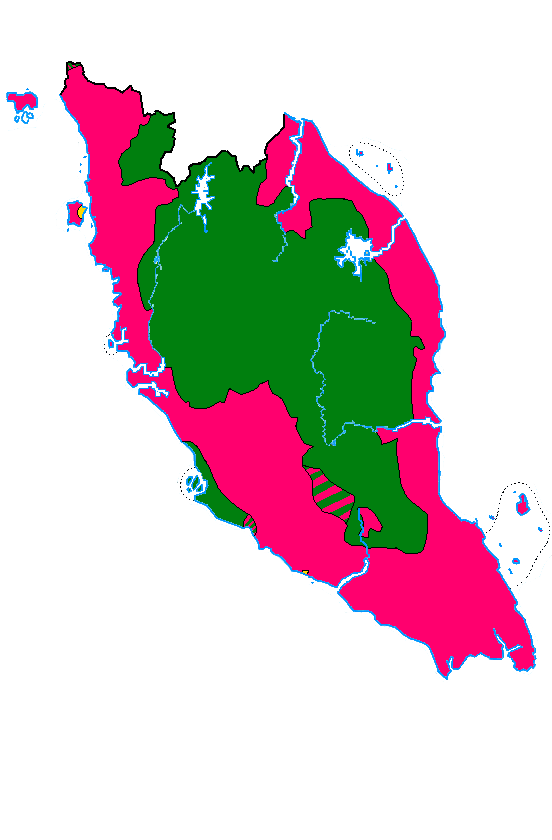

Reader Comments
Be the first to share your thoughts.