One Word Apart
Anwar's Taiwan remarks revealed a half-century of diplomatic language being quietly rewritten
On 31 May 1974, Kuala Lumpur and Beijing signed a joint communique establishing diplomatic relations. The document contained a two-tiered structure that only those fluent in diplomatic language would notice.
For the Beijing government, Malaysia used the word recognizes — a formal acknowledgement of fact.
But on the question of Taiwan's sovereignty, the document used acknowledges the position — recognising that China holds a particular view.
The two phrases look nearly identical. The difference is this: the first means Malaysia itself affirms something as true; the second means Malaysia acknowledges that China holds that position, without taking a view on whether the position is correct. This distinction was a precedent set by the 1972 Shanghai Communique — Washington still relies on the word acknowledges to this day to maintain substantive relations with Taiwan without being compelled to recognize it as Chinese territory. 1,2
Malaysia maintained this two-tiered structure for half a century.
The Word That Vanished#
In June 2024, Chinese Premier Li Qiang visited Kuala Lumpur. The two countries issued a joint statement.
Diplomatic correspondents noticed something. 3,4
The phrasing had quietly shifted from "acknowledges the position" to "recognizes that Taiwan is an inalienable territory" — from acknowledging China's claim to directly endorsing that claim as established fact. Malaysia had moved from noting that Beijing holds a position to underwriting it.
At the same time, the phrase "peaceful reunification" — standard language in previous joint statements — was amended, with the word "peaceful" removed.
Neither change generated much public discussion at the time. There was no parliamentary debate, no public outcry, no foreign ministry statement explaining what the shift meant. The new language quietly entered the record.
In 2026, Anwar put the position on the record in his own words during an Al Jazeera interview — and went further, drawing an analogy. 4,5
The response was explosive.
The Analogy#
What made Anwar's remarks land so hard, both in Taiwan and beyond, was not only the diplomatic verb recognize — it was his comparison of Taiwanese independence to a Malaysian state declaring secession, implying that Beijing would be within its rights to act in defence of territorial integrity. 5,6
"The One China Policy has never explicitly required support for a forceful resolution," The Diplomat noted in its analysis. "Anwar's framing went beyond the language any previous Malaysian government had used." 4,5
Taiwan's foreign ministry responded immediately, warning that the remarks "could undermine the investment confidence of Taiwanese businesses in Malaysia." This was not empty rhetoric — Taiwan ranked as the fifth-largest source of approved foreign investment in Malaysia in the first half of 2024, with RM24 billion committed. 7,3
Beijing, for its part, publicly praised Anwar. 4,5
How Fifty Years of Diplomatic Language Evolved#
To understand the controversy, it needs to be placed on a longer timeline.
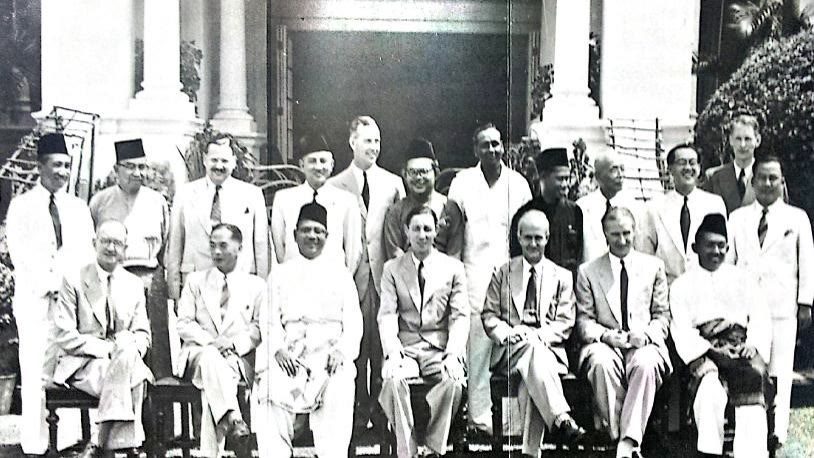
In 1974, Prime Minister Abdul Razak Hussein established ties with Beijing within the Cold War framework, making Malaysia the first Southeast Asian nation to do so. The choice of "acknowledges the position" over "recognizes" was deliberate — Malaysia wanted normal diplomatic relations with Beijing while keeping the door open for economic ties with Taiwan. That balance held for fifty years.
The shifts under successive governments tell their own story. The Najib era (2009–2018) preserved the 1974 language framework but was the most restrictive in practice: ministers were explicitly barred from visiting Taiwan, and Kuala Lumpur emphasized that it "fully adheres to the One China Policy." Mahathir 2.0 (2018–2020) represented the softest position any Malaysian government has taken — in a 2018 interview with Taiwanese media, he said: "We believe in one China, but we also believe Taiwan wants to exist independently, and Malaysia does not want to interfere." 8,6
Then came the 2024 joint statement under Anwar, which quietly completed the language upgrade.
Each government has operated in a narrower space than its predecessor. But this narrowing has never been publicly debated.
For the longer history of how Malaysia has navigated between great powers since independence, this site's The Advice That Must Be Followed traces the full arc — from the British Resident system to post-colonial state-building.
The Distance Between Written and Spoken#
The furor over Anwar's remarks exposed a structural problem in modern diplomacy.
Writing "recognize Taiwan as inalienable" into a joint statement is one thing. Having a prime minister say it in his own words to an international broadcaster is quite another. In diplomatic practice, the gap between the two is significant. The first is a document; the second is a political statement — the stuff of electoral messaging.
Malaysians had no opportunity to discuss what had changed in the 2024 joint statement because no one told them it had changed. When Anwar spoke on television, the argument entered public view for the first time — but by then, the question was no longer "should this have been changed?" It was "how far has it already gone?" 5,6
Between "acknowledge" and "recognize" lies a distance roughly that long.
Related debate and historical articles: Debate Hall · The Advice That Must Be Followed
Sources 8 Every important claim here can be checked. Open it and see.
Do not trust this site. Check it — every source below is clickable.
This site is written with AI assistance. Please check us.
AI can invent citations that look completely convincing — a real author's name, a plausible title, a sensible year, for a work that does not exist. This is not a theoretical risk; it is a known failure mode. That is why every source on this site is clickable. If a reference cannot be found anywhere, it may well not exist — and we want to know.
How to check us →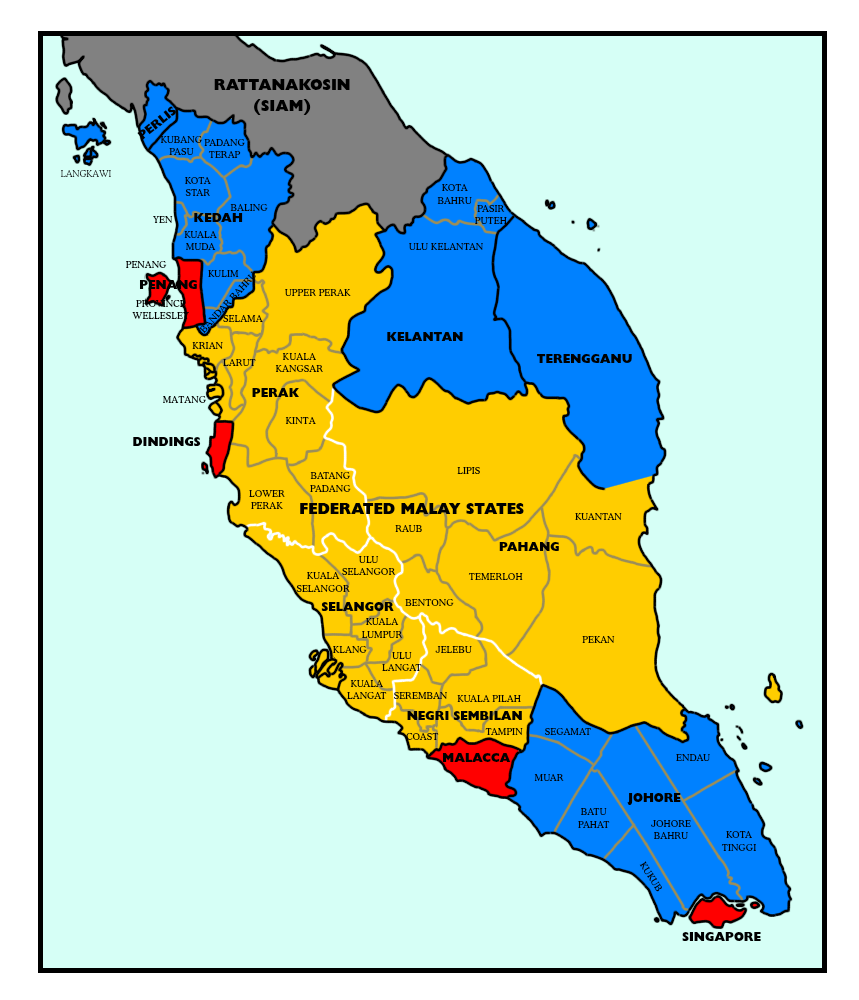
Reader Comments
Be the first to share your thoughts.