Ten Uniforms, One Room
Behind the UTC Pudu case, a bureaucratic system that has never been held accountable
At six in the morning, she and her husband were already waiting outside.
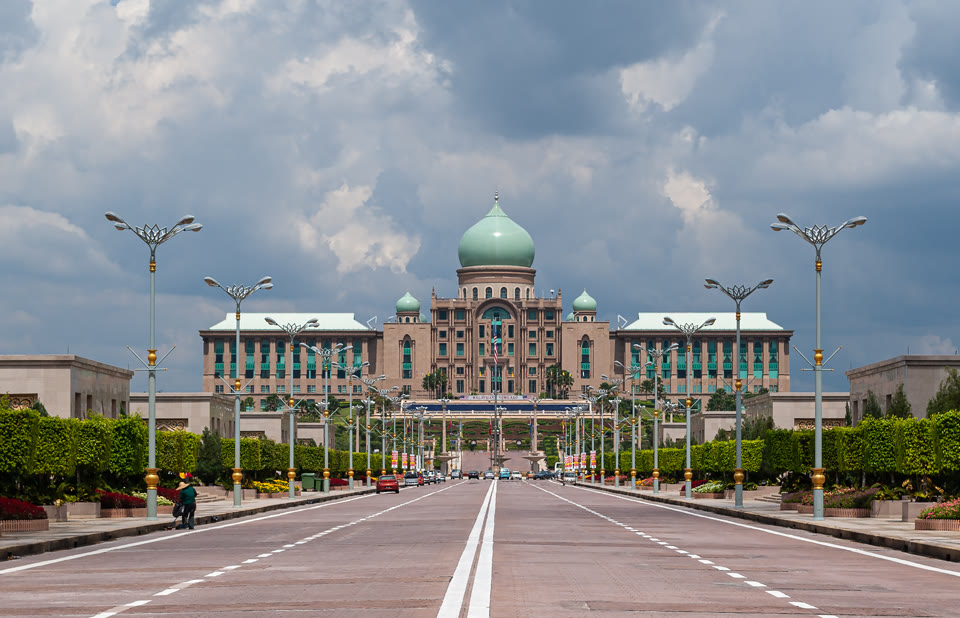
Applying for a first passport requires arriving early to queue. UTC Pudu Sentral is a public services hub in central Kuala Lumpur — air-conditioned, with a ticketing machine, and CCTV cameras in the corridor.
While waiting, she saw a stack of passport sleeves on the counter. She assumed they were included in the application package and took one. The whole thing happened in under a minute. No officer came over to stop her.
Then, an officer called her name.
Inside that room, she said, roughly ten or more immigration officers were waiting. There was only one question: had she "stolen" the passport sleeve? 1,2
The State Machine's First Response#
She later wrote about what happened on Threads. The post went viral.
On 25 August 2026, Immigration Director-General Datuk Zakaria Shaaban responded. 1,3
Not with an apology. Not by opening an internal disciplinary investigation against the officers involved.
JIM filed a police report, stating that her account was "inconsistent with CCTV footage, related records, and the testimony of officers on duty that day." 1,2
This response deserves a moment's thought.
A citizen complained that she had been humiliated by civil servants while applying for a passport. The supervising agency's first public action was to file a police report against the complainant for "lying."
Not "we will investigate internally." But "her account is problematic."
This is not an isolated administrative failure. This is a reflex. The institution holds the CCTV footage; the citizen has only her own account. When the two conflict, the institution's choice was to go to the police — rather than release the footage for the public to judge.
Who Is Behind That Door#
UTC Pudu Sentral is a public services centre that any citizen can walk into during daytime hours.
Malaysia's immigration detention facilities are not like that.
In March 2024, Human Rights Watch published an investigative report titled "We Can't See the Sun," documenting the following: approximately 16,000 migrants, refugees, and asylum-seekers are held in Malaysia's immigration detention facilities, more than 1,400 of them children. They often wait for months or even years, with no judicial oversight, facing arbitrary detention, inadequate medical conditions, and malnutrition. 4,5
In 2025, the OMCT Global Torture Index classified Malaysia as "high risk," based on documented reports of torture and abuse in police custody, prisons, and immigration detention centres between 2023 and 2024. 4,6
The Human Rights Commission (SUHAKAM) has long faced difficulty accessing detention facilities for on-site inspections. FORUM-ASIA in 2026 called on the Malaysian government to grant SUHAKAM stronger substantive access, arguing that the absence of accountability mechanisms is the structural condition that allows systematic abuse to continue. 6,5
Those locked inside those facilities have no Threads accounts. Their accounts cannot spread. No one will file a police report on their behalf, saying their statement was "inconsistent with CCTV."
The Legacy the "Advisors" Left Behind#
To understand all of this, we need to step back.
Malaysia's immigration legal framework is built on the Immigration Act 1959 (and its 1963 amendments), a law inherited from the British colonial administrative system. It grants enforcement officers wide discretionary powers, and leaves those subject to enforcement with very few formal channels for appeal.
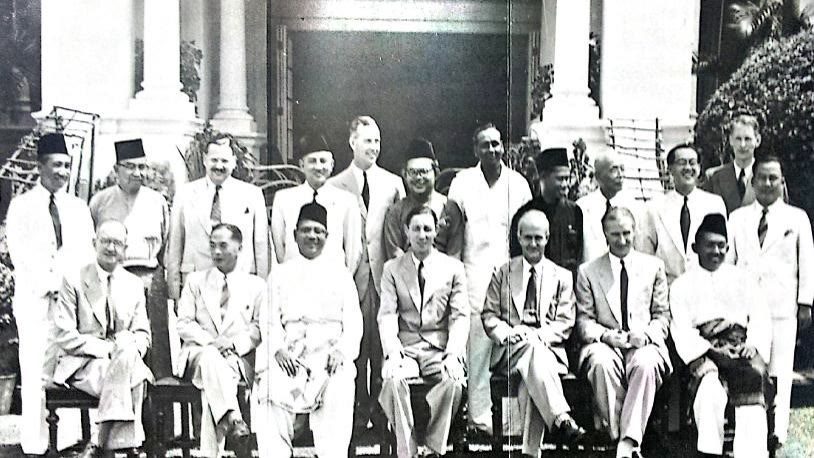
During the colonial era, this power structure had its own operational logic. The British "Resident" system concentrated administrative authority in the hands of a tiny number of posted officials, with the entire mechanism aimed at "governing," not "serving." That mentality — officers do not need to explain themselves to the governed, and an officer's judgment is the final judgment — was transferred largely intact when Malaya gained independence.
For how the British Resident system operated, and how its structure persisted after independence, this site's The "Advice" That Must Be Followed provides a detailed historical record.
For how "citizenship" as a qualification was demarcated in Malaysia — and who was placed at the margins from the very beginning — Who Became a Citizen provides the full context.
This is not to say that the ten-plus officers on that day "were caused by the colonial system, so they bear no personal responsibility." Individual choices and institutional structures are two different things.
But if a system has never been required to explain itself to the governed, its officers will treat "not explaining" as the default. When someone files a complaint, the first instinct is not "investigate" but "defend."
The room at UTC Pudu Sentral, and the detention facilities where people have been held for years with no voice, are two endpoints in the same structure.
That Passport Sleeve, and That Line#
As of this article's publication, the police investigation is still ongoing. 1,2
She went to apply for a passport and ended up as a subject of investigation. She complained on social media and ended up as the subject of a police report.
JIM says CCTV proves her account is inconsistent. But JIM has not released the CCTV footage. She has no way to obtain the recordings. This "evidence" exists only in the institution's hands.
This information asymmetry — the state machine holds the evidence, the citizen has only her memory and her account — in the UTC Pudu Sentral case amounts at worst to an unfair experience. In immigration detention facilities, it is the foundation of systematic power imbalance.
How a country treats those who lack the resources to fight back is a more honest mirror than any official statement.
Related debates and history chapters: Debate Hall · The "Advice" That Must Be Followed · Who Became a Citizen
Sources 6 Every important claim here can be checked. Open it and see.
Do not trust this site. Check it — every source below is clickable.
This site is written with AI assistance. Please check us.
AI can invent citations that look completely convincing — a real author's name, a plausible title, a sensible year, for a work that does not exist. This is not a theoretical risk; it is a known failure mode. That is why every source on this site is clickable. If a reference cannot be found anywhere, it may well not exist — and we want to know.
How to check us →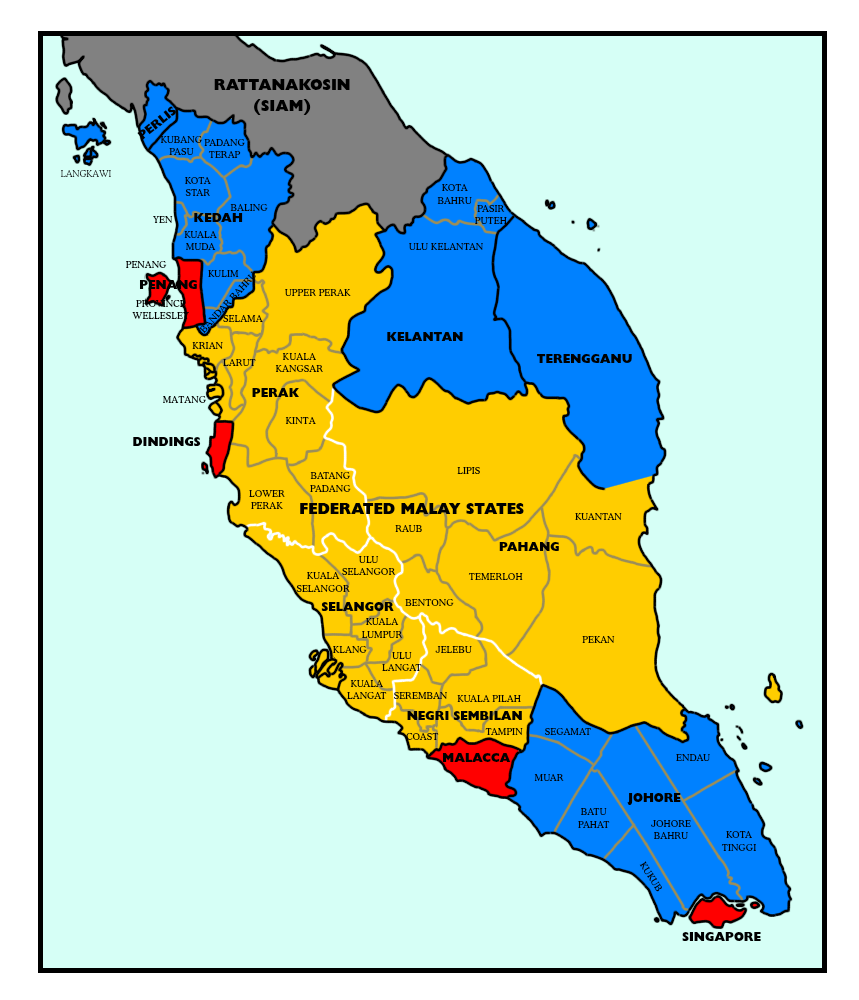
Reader Comments
Be the first to share your thoughts.