Why Does East Malaysian Politics Matter? Taib, Shafie, and Sabah-Sarawak State Rights
One held Sarawak for thirty-three years; one briefly governed Sabah after leaving UMNO; East Malaysia is not an appendix to Peninsular coalition arithmetic
Peninsular people often look at East Malaysia by counting seats first.
How many for GPS.
How many for GRS.
How many for Warisan.
Who supports the prime minister, and who completes the majority.
That view is not entirely wrong. After 2022, without East Malaysian seats, the federal government would be hard to hold.
But if seats are all we see, East Malaysia becomes only a number in a Peninsular coalition table.
East Malaysia is not a number.
It has its own strongmen, families, state rights, land, oil, communities, migration, and distrust of the federal centre.
White Hair: Sarawak's long shadow#
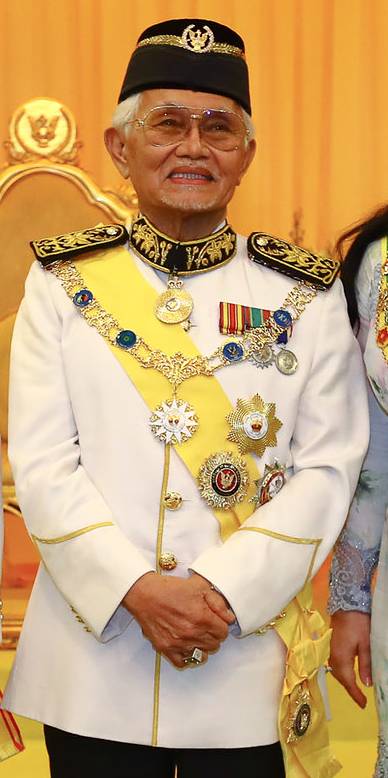
Taib Mahmud is often called "White Hair" in the Chinese community.
He became Chief Minister of Sarawak in 1981 and remained until 2014, when he became Governor of Sarawak; he died in February 2024. That length of time is itself a political fact.1,2
Thirty-three years.
In thirty-three years, a state changes roads, forests, towns, companies, seat boundaries and local elite networks. Taib's supporters write him as the builder of modern Sarawak; scholars of Sarawak politics also see another side: how long rule wove state resources, Muslim Bumiputera politics, PBB and administrative networks into a stable structure of power.1,2
The controversies around Taib cannot be covered with one sentence.
He long faced public criticism and international reporting over wealth, logging, family business interests and resource governance. Those allegations and controversies must be attributed to critics, media or civil society groups, not written as if this site had delivered a court verdict.1,3
But the reverse is also true: we cannot erase the questions simply because this chapter does not try each allegation one by one.
A state leader who held power for thirty-three years must carry political responsibility for how state resources were distributed, who received land and concessions, and how the state government responded to native land and environmental disputes.1,3
Shafie: a Sabahan who walked out of UMNO#
Shafie Apdal's route was different.
He came out of the Sabah UMNO system, long represented Semporna, later left UMNO, founded Warisan, and became Sabah Chief Minister after 2018. Parliament today lists him as the MP for Semporna, from Warisan.4,5
If Taib represents long control of a state machine, Shafie represents another kind of East Malaysian politics: walking out of a national ruling-party system and reorganising politics around a Sabah local card.
Warisan's name is direct.
Heritage.
It tells voters: Sabah is not a branch of Peninsular parties. Sabah has its own political subjecthood.
After 2018, Shafie briefly governed Sabah; after the 2020 state election, he lost the state government. That rise and fall show that the local card has power, but Sabah's coalitions, defections, communities and federal-resource networks are also highly fragmented.4,5
East Malaysia's shared questions#
Taib and Shafie are not alike.
One is a long-serving strongman.
The other built a local anti-centre brand after leaving the national party.
But together they remind Peninsular readers of one thing: East Malaysian politics cannot be noticed only when the federal government needs numbers.
MA63, petroleum revenue, immigration control, native land, state development, religious and language space - these are not merely "local issues".
They are federal questions left by the formation of Malaysia.
When Peninsular parties need East Malaysian seats, East Malaysia suddenly matters.
But a mature federation should not remember Sabah and Sarawak only when coalition arithmetic fails.
The next chapter may continue with people. The Peninsula still has many names not yet in this group of biographies: Zahid, Nurul Izzah, Tengku Razaleigh, Mat Sabu, Wan Azizah. Each one opens a different political route.
Sources 5 Every important claim here can be checked. Open it and see.
Do not trust this site. Check it — every source below is clickable.
-
Search for this source ⌕ no direct link — this button searches for the work 2026-07-31 Report this source
This site is written with AI assistance. Please check us.
AI can invent citations that look completely convincing — a real author's name, a plausible title, a sensible year, for a work that does not exist. This is not a theoretical risk; it is a known failure mode. That is why every source on this site is clickable. If a reference cannot be found anywhere, it may well not exist — and we want to know.
How to check us →
Reader Comments
Be the first to share your thoughts.