Those Who Left Their Names Behind
Shamans, batin, and the people who never entered dynastic history — as remembered by the Semai and Btsisi'
Dynastic history loves to record kings.
Military history loves to record generals.
But in this chapter of Orang Asli history, what often remains is a different kind of name: a stream, a ridge, a cave, a woman's marriage, a shaman's burial place.
These names may never appear in national textbooks.
But in the forest, they have lasted far longer.
The Shaman of Danas Semenaak#
When Heikkila documented the Semai memory of Prak Sangkiil, she wrote of a shaman.
The paper does not give us his personal name.
It tells us only that he was one of the central figures of resistance against the Rawa in the War region: in Semai memory, he held this territory alone against the marauders. After his death, his grave was placed on the Danas Semenaak ridge; the burial ground was called Nyep Semenaak, because people believed that his power could still help them face hardship today. 1,2
We cannot invent a story here.
We do not know the year he was born.
We do not know what he looked like.
We do not know what he said when he fought.
What we know is this: Semai memory has kept his grave alive in a place name.
That is already significant.
Because for a people without palace archives, a burial ground is an archive.
Cebaaq Tenlap and Huuk Cerlak Gap#
Heikkila writes that the place names most closely bound to the memory of Prak Sangkiil are Cebaaq Tenlap and Huuk Cerlak Gap. 1,2
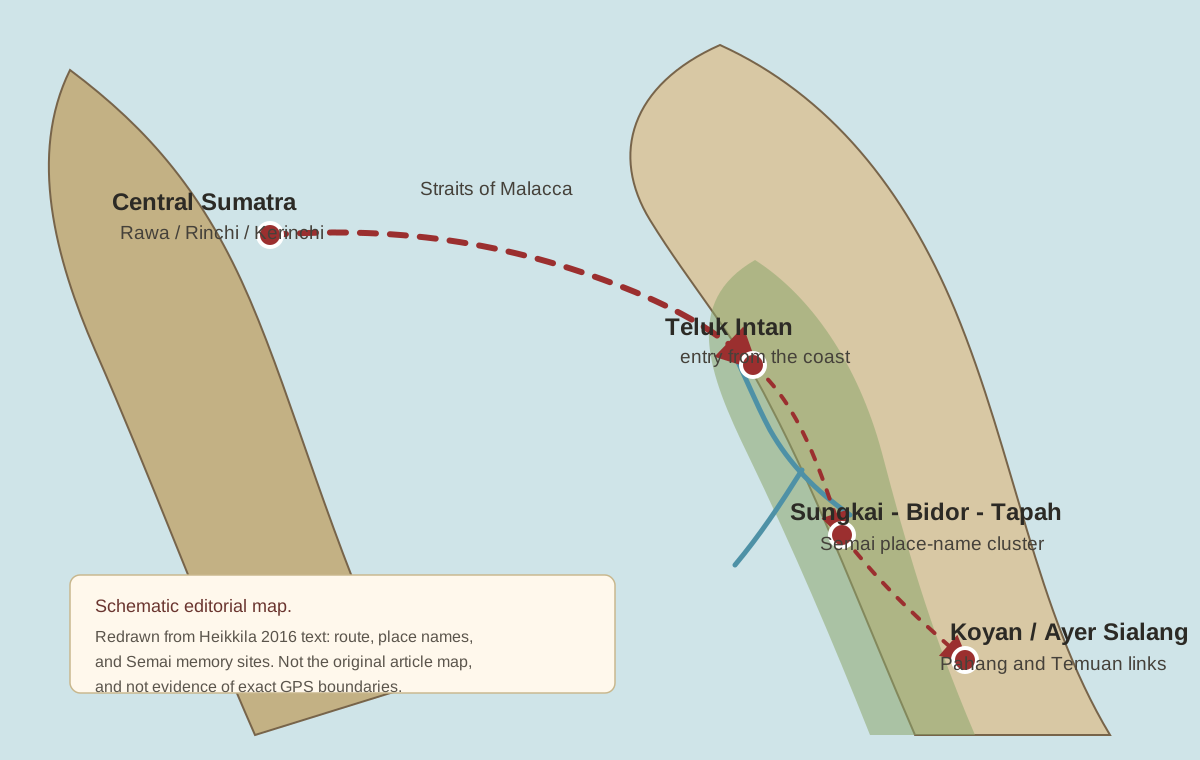
Cebaaq Tenlap is no ordinary confluence.
Semai narratives from the War and Tenlap area record that the Rawa entered from downstream settlements near Sungkai. Some fled; those who remained prepared poisoned blowpipe darts and fought back against the Rawa. In time, this river junction became a symbol of Semai victory over "Malay might." 1,2
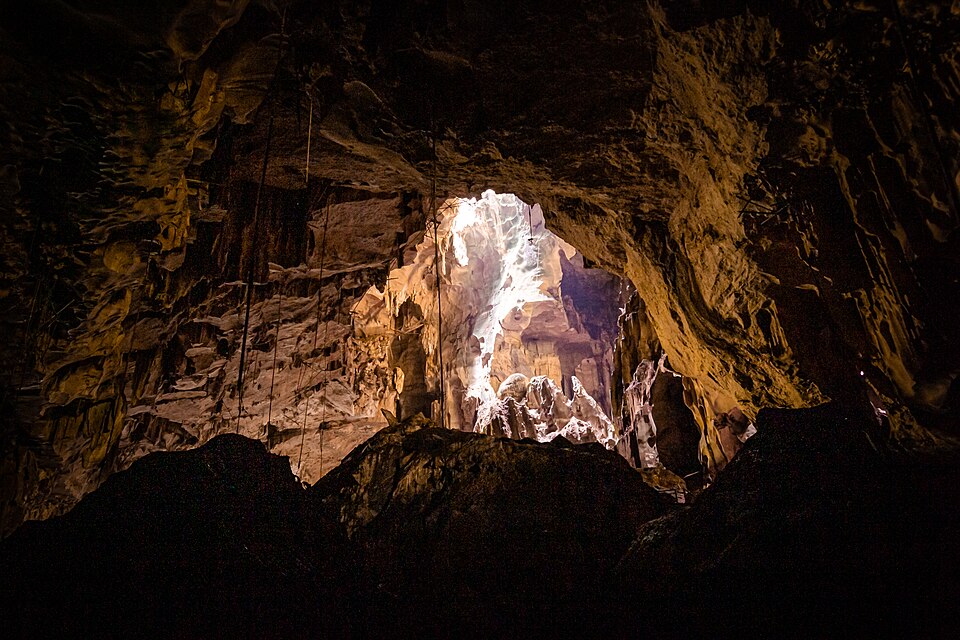
Nearby lies a sunken cave.
It is called Huuk Cerlak Gap — meaning roughly "to thrust into a hole / Malay." Heikkila explains that Semai narrative remembers it as the place where Rawa bodies were cast down; the adjacent stream, Taw Cerlak Gap, preserves the same memory. 1,2
This is not about cultivating hatred.
It is about making plain: Orang Asli history is not only a history of victimhood.
They also fled.
They also hid.
They also resisted.
And they buried their resisters on the ridgelines.
Bah Getaar and Leeb Ranway#
Some names remember victory.
Some names remember only the flight.
Taw Bah Getaar commemorates Bah Getaar — a person who escaped slave-raiders, endured great hardship, and finally settled beside a stream. 1,2
Leeb Ranway is the name of a cave hidden behind a waterfall. Heikkila writes that the name conveys the feeling of "being able to walk with arms swinging freely": people sheltered there, and eventually came to feel safe and free. 1,2
Names like these are small.
Small enough to carry no year.
Small enough to carry no surname.
But they are more powerful than any vague narrative of "ethnic victimhood." Because they tell us that fear was not abstract. Fear was a road people dared not travel, a cave one had to crawl into behind a waterfall.
Dirik: From Flight to Founding a Village#
Heikkila also writes of Dirik.
She records that Juli's 1998 fieldwork documented Dirik marrying a Semai woman from Bidor, after which he led her people southward across several locations to take refuge. After the colonial government formally prohibited slave-raiding, Dirik founded Gunung Payung — present-day Erong — serving as headman and introducing Temuan customs to the Semai who followed him. 1,2
Dirik is not a confirmed case of someone of slave origin.
More precisely, he is a Temuan ancestral figure associated with the memory of slave-raiding — a fugitive and a village founder.
That distinction must be maintained.
Because we are not searching for a pleasing heroic legend.
We are looking at how a community, once hunted, reorganised its life.
Batin Gading and Batin Pahang#
On another front, when Nowak and Muntil documented Btsisi'/Mah Meri oral tradition, they recorded two women's names: Batin Gading and Batin Pahang. 2,3
The Btsisi' account holds that their community attempted to ease tensions with the Malays by arranging for Btsisi' women to marry into Bugis royal households.
The two examples cited are: Batin Gading marrying Pahang's Sultan Tengku Mahmud; and Batin Pahang marrying Selangor's Sultan Abdul Samad. The Btsisi' hoped these marriages would build alliances, and that the children of these women would attain positions of leadership. The paper goes on to note that the expected peace did not follow. 2,3
Here too we must pause.
This is not a royal marriage register.
This is an account preserved in Btsisi' memory and ethnohistory.
We therefore cannot present it as uncontested court history.
But neither can we dismiss it as worthless legend.
It shows that the Btsisi' were not merely passive recipients of violence. They attempted diplomacy, attempted marriage alliances, attempted to place their women within networks of royal power — in exchange for safety, status, and political space for the next generation. 2,3
Batin Is Not Slave#
One more term deserves attention: Batin.
In these sources, Batin commonly refers to a community leader among the Orang Asli. The names Batin Gading and Batin Pahang should not be read as "enslaved women." Their position in these accounts is closer to that of community leaders or women from leading families, placed into marriage alliances. 2,3
That is different from being a slave.
A slave is a person who is owned, compelled to labour, and can be bought and sold.
Batin is a title of leadership.
Vassal is yet another matter: it denotes a subordinate, a tributary, a dependent polity. A group may retain its own leaders and identity while being politically subordinate to a greater ruler — paying tribute, providing escort, offering forest products, or rendering military service. Vassal is not the same as slave; but in a world of unequal power, a tributary relationship can slide toward forced labour, exploitation, and even enslavement. 2,3
Keeping these terms distinct is the only way to avoid writing Orang Asli history into confusion once again.
Why These People Count as "Notable"#
By the standards of national textbooks, none of them would qualify.
No portraits.
No bronze statues.
No parliamentary roads named in their honour.
But in Orang Asli history, the significance of a name is not calculated that way.
The shaman of Danas Semenaak matters because his grave still helps later generations organise their memory.
Bah Getaar matters because a stream remembers a fugitive.
Dirik matters because after flight came the founding of a village.
Batin Gading and Batin Pahang matter because they allow us to see that Orang Asli communities, when facing royal power, were not only victims — they also negotiated, formed alliances, and experienced the failure of those political efforts.
These figures should not be written into myth.
Nor should they continue to sink in footnotes.
The Evidentiary Boundaries of This Article#
The shaman of Danas Semenaak, Cebaaq Tenlap, Huuk Cerlak Gap, Bah Getaar, Leeb Ranway, and Dirik depend primarily on Heikkila 2016. This article does not supply these figures with surnames, dates, dialogue, or physical descriptions. 1,2
Batin Gading and Batin Pahang depend primarily on Nowak & Muntil 2004's documentation of Btsisi' ethnohistory. This article presents these accounts as marriage alliances within Btsisi' memory, and does not assert that they have been independently corroborated by royal archival records. 2,3
The distinctions between Batin, vassal, and slave are conceptual clarifications made in this article to prevent misreading. Titles and statuses across different sources are not interchangeable: a community leader is not a slave, a tributary is not a slave, but a tributary relationship may exist within a structure of profoundly unequal power. 2,3
This article carries sensitive: true. Before publication, sentences touching on Malays, the Rawa, Orang Asli, Sultan Abdul Samad, Pahang/Selangor royal marriages, and slave-raiding must be reviewed by the editor line by line.
Further ahead, the colonisers will bring out their forms — and sort these people into new categories.
Sources 3 Every important claim here can be checked. Open it and see.
Do not trust this site. Check it — every source below is clickable.
This site is written with AI assistance. Please check us.
AI can invent citations that look completely convincing — a real author's name, a plausible title, a sensible year, for a work that does not exist. This is not a theoretical risk; it is a known failure mode. That is why every source on this site is clickable. If a reference cannot be found anywhere, it may well not exist — and we want to know.
How to check us →
Reader Comments
Be the first to share your thoughts.