The Ruler Chosen by Four Chiefs
Negeri Sembilan's constitutional dispute turns on one proclamation, one constitutional provision and two ways of reading it. To understand it, we must go back to around 1773, when four local chiefs invited a prince from across the Straits and agreed that great matters would follow the majority of the four
On 19 April 2026, four men sat in front of reporters and announced something that could not happen in any of Malaysia's other eight Malay states: they said that the ruler of Negeri Sembilan, the Yang di-Pertuan Besar, had been removed from office, and proposed that Tunku Nadzaruddin Tuanku Ja'afar succeed him. According to Free Malaysia Today's account, they did not make public any reasons or evidence at the time. 1,2
In the other states that have a sultan, the throne passes down by the royal house's own rules of succession, and no one can "announce" that a sultan has been removed. Negeri Sembilan is different: here the ruler has always been an elected one.
This article does not judge who is right and who is wrong. As of 12 October 2026, no court has ruled on who is the lawful occupant of the throne. The question it sets out to answer is a different one: why does Negeri Sembilan have a system in which chiefs elect the ruler?
The three strands of the dispute#
First, the events in order. There are really three strands, tangled together.
The first strand is who counts as an Undang. The Undang are the chiefs of Negeri Sembilan's four major luak (territories): Sungai Ujong, Jelebu, Johol and Rembau. On 17 April 2026, the Dewan Keadilan dan Undang (DKU), the council of the Undang, accepted a decision, taken by one side in Sungai Ujong in accordance with local custom, to remove its Undang from office; the person concerned does not accept it. 1,2
In August the DKU went further, stating that three of the four signatories of the 19 April announcement were not, at the time, lawfully serving Undang; the signatories' side disagrees. 2,1
The second strand is whether that announcement has any effect. On 17 September the Attorney-General's Chambers issued a statement saying that the 19 April announcement did not meet the mandatory requirements of Article X of the State Constitution and was therefore invalid; the statement also said that whether the announcement is valid should be decided through the proper constitutional and legal process. 3,1 The signatories maintain that the announcement is valid.
The third strand is which side the state government stands on. On 16 September the state executive council (exco) publicly stated that it recognised the 19 April announcement. 4,1 On 20 September the palace announced that the appointments of all exco members other than the Menteri Besar had been revoked, and this was gazetted on 24 September. 5,6 The Menteri Besar, Ismail Lasim, said that the revocation had not been made on his advice and was therefore legally invalid. 7,6
According to Free Malaysia Today, on 5 October ten former exco members whose appointments had been revoked filed suit in the Seremban High Court seeking a declaration that the revocation was invalid. According to Harian Metro, on 7 October the four signatories withdrew the application for judicial review that they had filed in July.
Separately, at least two people have been charged with offences under the Sedition Act in connection with statements made about the dispute. Both deny the charges, and the cases are still before the courts.
One provision, two readings#
The hardest thing about this dispute is that both sides often cite the very same sentence.
Article XXXVIII(5) of the State Constitution provides that exco members (other than the Menteri Besar) "shall hold office at the Ruler's pleasure, unless the appointment … shall have been revoked by the Ruler on the advice of the Menteri Besar". 8,9
The Attorney-General's Chambers and the palace read the first half: tenure depends on the Ruler's pleasure. The Menteri Besar reads the second half: revocation requires his advice. 5,7 Both sides cite the same sentence, and no court has yet said which reading is correct.
Another provision is Article X. It provides that where the Ruler is found to suffer from a serious disability or to have acted in a manner that derogates from the dignity of his office, the Undang may call on him to suspend his functions or abdicate, but only "after full and complete enquiry by the Undangs". 8,10 After an abdication, a proclamation must also be signed jointly by the Undang and the Menteri Besar.
Article XXIX further provides that powers conferred on the Undang must be exercised by "not less than three" Undang. 8,2 So the question "who is a lawfully serving Undang" bears directly on whether the announcement had the necessary numbers.
There is also a finality clause. Article XVI(3) provides that opinions of the DKU on matters within its jurisdiction are final and may not be challenged in any court. 8,3 It should be noted, however, that in the 2003 amended text this site has read, the wording of this clause refers to the election and removal of the Undang and the Tunku Besar Tampin, the "Ruling Chiefs", and does not expressly mention the Yang di-Pertuan Besar; whether it has been amended since 2003 this site has been unable to verify.
Why chiefs may elect the ruler#
Why, then, does Negeri Sembilan's constitution say that the Yang di-Pertuan Besar is elected by the Undang?
Article VII(2) of the State Constitution reads: the Yang di-Pertuan Besar is elected by the Undang of Sungai Ujong, Jelebu, Johol and Rembau "in accordance with the custom of the State". 8,11 The key words are the last ones: in accordance with the custom of the State.
To find that custom, we have to go back to the eighteenth century.
Around 1773: a prince who was invited#
Two early English-language accounts, T.J. Newbold's work of 1839 and a 1910 paper by Parr and Mackray based on the Rembau chronicle, tell the same story.
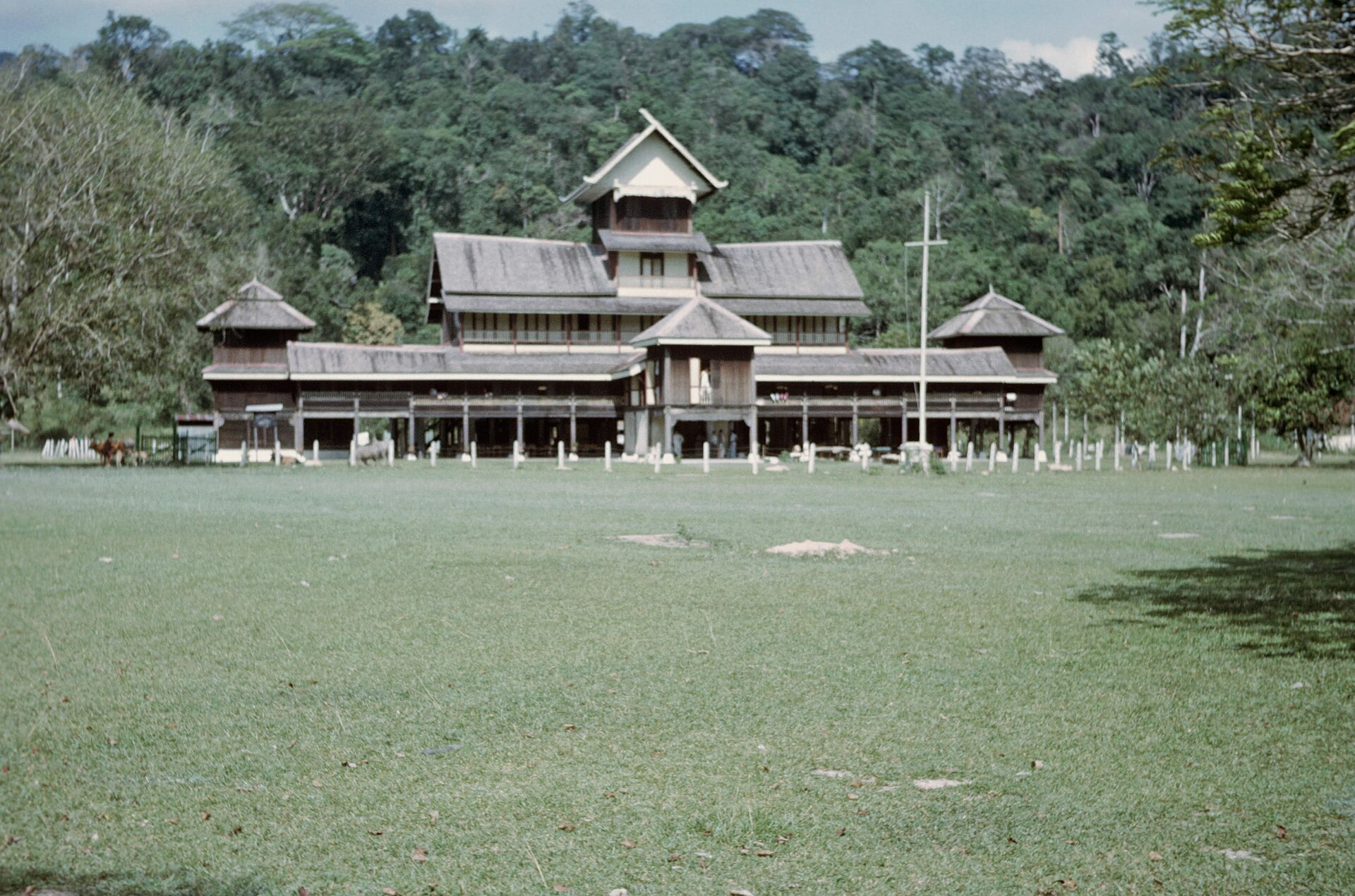
In the middle of the eighteenth century, the small states of this region were governed by their own chiefs, then called Panghulu, and were nominally subject to Johor. A Bugis prince was installed as head of these small states, but the chiefs of the interior would not accept him and instead invited a prince from the Minangkabau royal house in Sumatra, named Raja Melewar. Around 1773 the Bugis prince withdrew to Riau; the chiefs of Sungai Ujong, Rembau, Johol and Seri Menanti, with the consent of the Sultan of Johor and the Malacca authorities, installed Raja Melewar as "Yang di-Pertuan Besar". 12,13 Parr and Mackray record that he was installed in 1773 at Penajis in Rembau, and afterwards lived at Seri Menanti. 13,12
The two accounts were written in different periods by different authors, but both rest on the same body of local oral tradition. It can therefore be said that the story is "recorded in two early sources", but not that it has "independent corroboration".
More important is the agreement that Newbold recorded. The terms, said to be kept by the chiefs of Seri Menanti, provided that the Minangkabau ruler was to summon the four Panghulu to consult on all affairs of state and to "abide by the majority"; for his maintenance, each household in the four territories was to give him one measure of rice and two coconuts a year. Newbold uses the words "it is said"; he was relaying a copy.
Parr and Mackray in 1910 also cautioned readers that the account of how Raja Melewar came to Negeri Sembilan "has naturally been embellished with legendary additions".
A small crown, large chiefs#
That agreement determined the shape of Negeri Sembilan's kingship.
A saying current in Rembau, recorded by Parr and Mackray, runs that the ruler is not the lord of the land and cannot raise levies, but justice resides with him and the people provide his food and clothing. In 1951 the Dutch anthropologist de Josselin de Jong, in his study of the social and political structure of Negeri Sembilan and Minangkabau, concluded that the Yang di-Pertuan Besar's actual political power "was and is small", and that his importance lies in the sacred and arbitral position that he represents.
After the British arrived, this shape was written into treaties. According to Parr and Mackray, the federation agreement of 1895 stated that no chief was to exercise in any state powers beyond those he already held; in 1898 the four Undang signed a declaration acknowledging the nominal overlordship of the ruler of Seri Menanti, who became arbiter of disputes among the Undang but had no authority to interfere in the internal affairs of each state.
In 1959 this relationship was written into the modern constitution. The Preamble to the State Constitution was promulgated over the signatures of the then Yang di-Pertuan Besar, the four Undang and the Tunku Besar Tampin together. At the federal level, Articles 71(2) and 181(1) of the Federal Constitution specifically name "the Ruling Chiefs of Negeri Sembilan" and protect their powers and privileges, an arrangement unique in the country.
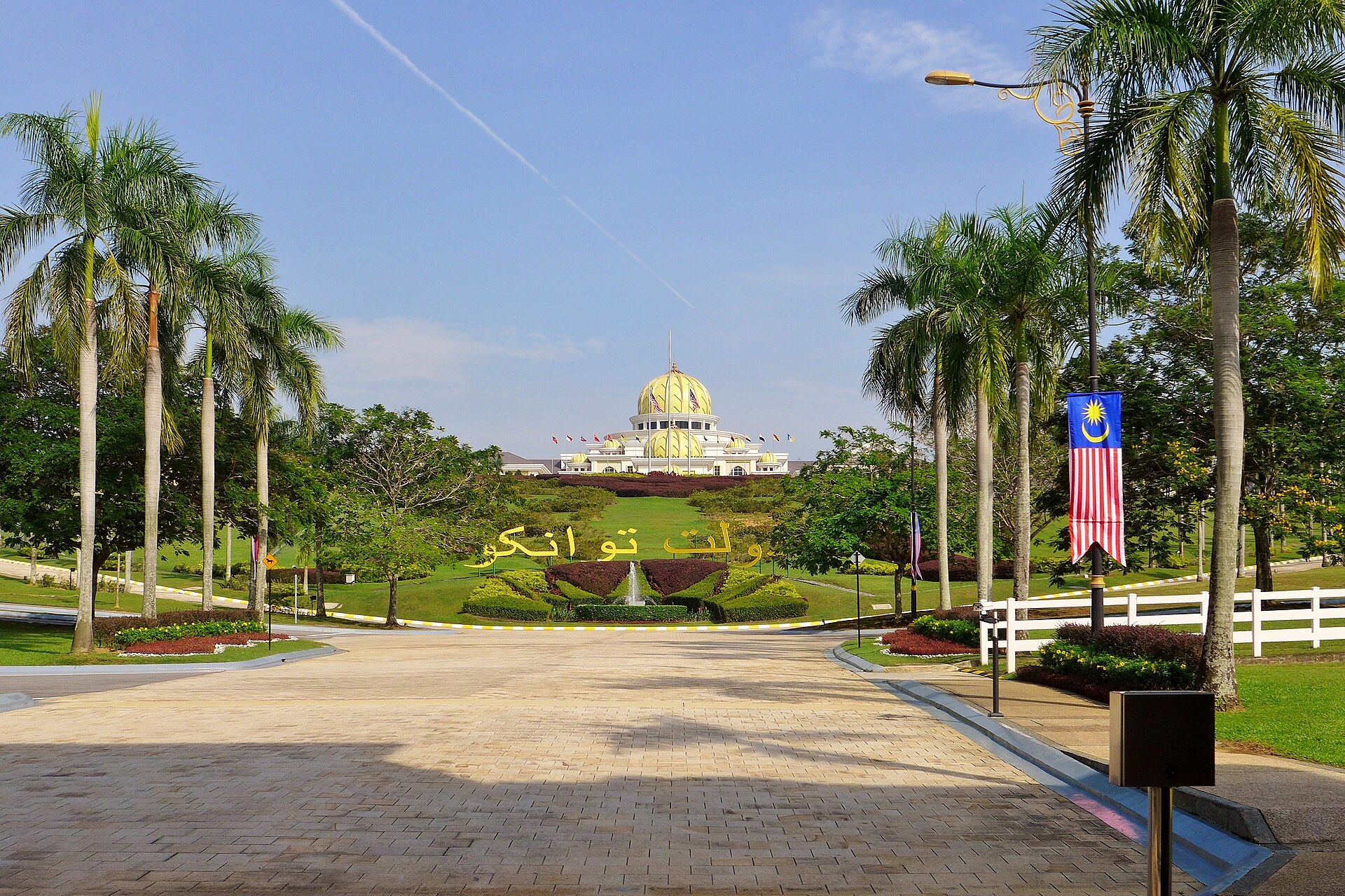
On 29 December 2008, the present Yang di-Pertuan Besar was elected and proclaimed by the Undang in accordance with this adat perpatih custom. 14,2
Who are the people of this land#
Within this system lies another story, about "who is a native of the land", and it is one that the system tells about itself.
Not just anyone can be an Undang in Negeri Sembilan. According to Newbold and to Parr and Mackray, the Undang of Rembau must come from a local Biduanda family (also called waris, "heirs of the land"), and the Biduanda are themselves divided into two branches, one of which is called Biduanda Jakun. 12,13 A Rembau tradition recorded by Parr and Mackray says that the mother of the first Undang was the daughter of a local Jakun chief.
In 1898 Hale recorded that the Biduanda took pride in descent from the indigenous people of the area and were called the "people of the soil". 15,12 Newbold also records that in the election of chiefs in places such as Johol, the Batin, the headman of the indigenous people, had a voice. 12,15
These are colonial-era officials' records of local oral tradition and carry the outlook of their time; in 1921 Wilkinson already expressed doubt about the claim that the chiefs were descended through the female line from indigenous headmen. They can therefore only be read as the system's own account of its origins, not as a verified genealogy.
But the story itself is striking: in Negeri Sembilan the ruler was invited from across the Straits, while those who elect him regard themselves as descendants of the original people of this land.
Limits of the evidence#
- The events of 2026: this site has not obtained the original statements of the Attorney-General's Chambers, the DKU or the palace, nor the original gazette notice; the account of events rests entirely on the reports of several news organisations.
- The 5 October suit, the 7 October withdrawal of the judicial review, and the two sedition cases: this site has found these only in a single report, or in reprints of the same source, and treats them as single-source; the text names the source and carries no citation marker.
- Provisions of the State Constitution: this site read a scanned copy of the 2003 amended text; amendments after 2003 have not been checked.
- Articles 71 and 181 of the Federal Constitution: this site read the 2007 revised text transcribed by the Constitute Project, not the current official reprint of the Attorney-General's Chambers; as a single text, it carries no citation marker in the body.
- 1773 and Raja Melewar: both early sources record it so, but both rest on the same local oral tradition; the agreement to "abide by the majority" recorded by Newbold is, by his own account, only "said" to exist.
- The Biduanda and the indigenous people: this comes from colonial-era records, and scholars disagree about it.
Around 1773, the agreement said that on great matters the ruler must summon the four chiefs and abide by the majority.
Two hundred and fifty years later, the seats of the four chiefs themselves have become the matter in dispute, and which four people make up that "majority" is waiting for the courts to answer.
Note: At the time of writing (12 October 2026), the related civil proceedings and criminal cases in Negeri Sembilan are all ongoing, and no court has ruled on who occupies the throne. This site will keep following developments and update this article.
Sources 15 Every important claim here can be checked. Open it and see.
Do not trust this site. Check it — every source below is clickable.
-
Journalism Free Malaysia Today (Nicholas Chung), 'Negeri Sembilan crisis: what we know so far', 28 Sep 2026Search for this source ⌕ no direct link — this button searches for the work 2026-10-12 Report this source
-
Search for this source ⌕ no direct link — this button searches for the work 2026-10-12 Report this source
-
Search for this source ⌕ no direct link — this button searches for the work 2026-10-12 Report this source
-
Search for this source ⌕ no direct link — this button searches for the work 2026-10-12 Report this source
-
Search for this source ⌕ no direct link — this button searches for the work 2026-10-12 Report this source
-
Search for this source ⌕ no direct link — this button searches for the work 2026-10-12 Report this source
-
Journalism Free Malaysia Today, \"Negeri Sembilan MB disputes ruler's sacking of exco members\", 21 Sep 2026Search for this source ⌕ no direct link — this button searches for the work 2026-10-12 Report this source
-
View excerpt ↓
The Yang di-Pertuan Besar shall be such person as shall be elected by the Undangs of the territories of Sungai Ujong, Jelebu, Johol and Rembau in the manner hereinafter provided and in accordance with the custom of the State.
-
Search for this source ⌕ no direct link — this button searches for the work 2026-10-12 Report this source
-
Search for this source ⌕ no direct link — this button searches for the work 2026-10-12 Report this source
-
Journalism The Nut Graph (Bernama), 'Tunku Mukhriz the new ruler of Negeri Sembilan (Updated)', 29 Dec 2008Search for this source ⌕ no direct link — this button searches for the work 2026-10-12 Report this source
This site is written with AI assistance. Please check us.
AI can invent citations that look completely convincing — a real author's name, a plausible title, a sensible year, for a work that does not exist. This is not a theoretical risk; it is a known failure mode. That is why every source on this site is clickable. If a reference cannot be found anywhere, it may well not exist — and we want to know.
How to check us →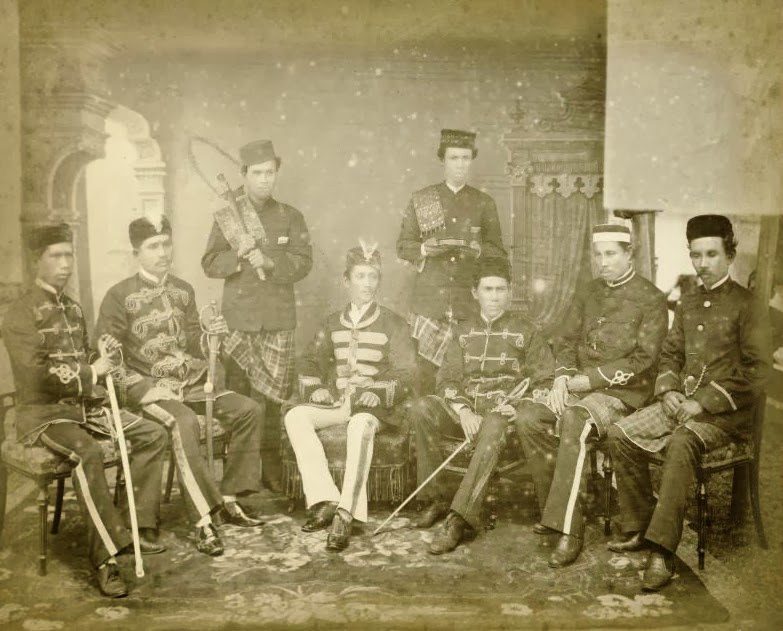
Reader Comments
Be the first to share your thoughts.