One Mooring Line, Tied for Seventy-Two Years
Sarawak has taken the petroleum laws to the Federal Court, with the hearing set for 25 January 2027; the case asks not who gets how much, but how the 1966 statutes reached Sarawak
Several reports that appeared on 1 October 2026 described the same case management and the same question: before discussing a stretch of seabed, should the court first read a document seventy-two years old?
The document is the Sarawak (Alteration of Boundaries) Order in Council 1954. Sarawak's lawyers said its validity should be decided first. Petronas' lawyers said the request had no basis. The federal government's lawyers said it need not be treated as a preliminary issue. 1,2
The court left the matter to the panel that will eventually hear the case. 1,2
A dispute the world took to be about money began, before the hearing even opened, by arguing over a line.
What this article is about#
One thing must be made clear first: the court has not heard the case, and there is no ruling. The hearing is scheduled for 25 to 29 January 2027, five days. 3,1,2 Everything in this article about Sarawak's position is "Sarawak's claim"; the positions of Petronas and the Federation are written only as far as the public reports show them.
On 23 February 2026, Sarawak filed a petition in the Federal Court. 4,5 It invokes Articles 4(3) and 128(1) of the Federal Constitution: the Federal Court has power to rule on whether a federal or state law goes beyond legislative competence. 4,6
What it seeks is not a sharing ratio. According to reports, Sarawak asks the court to declare the Petroleum Development Act 1974 (PDA), the Continental Shelf Act 1966 and the Petroleum Mining Act 1966 unconstitutional "insofar as they apply to Sarawak", and void from the start. 3,2 The public record does not show the petition demanding any specific sharing figure.
To see why the request takes this shape, one has to follow a line from 1958 to 2012. Like a mooring line on a quay: one end tied long ago, the other tied today.
One end of the line: 1958#
Sarawak's first argument begins even earlier.
Sarawak claims that the Oil Mining Ordinance 1958 was preserved when Malaysia was formed in 1963 and was never lawfully repealed. 6,4
This ordinance is a state law. By Sarawak's account, it is the basic law of petroleum in Sarawak.
The second, linked argument is about boundaries. Sarawak cites two British Orders in Council, of 1954 and 1958, and claims that the continental shelf lies within the boundaries those two orders fixed. 4,1 These are the documents the lawyers were scrambling to have read first on 1 October.
1966: two statutes that at first did not cover Sarawak#
In 1966, Parliament passed the Continental Shelf Act and the Petroleum Mining Act. According to Sarawak, these two statutes at first applied only to Malaya. 4,6
So how did they reach Sarawak?
Sarawak's answer: through an emergency ordinance during the 1969 Emergency, which extended them there. 6,4 This is Sarawak's claim. The Federation's and Petronas' written submissions on this chain of extension are not found in the public record; this site cannot treat it as an established fact.
1974 and 1975: one company, one number#
In 1974, Parliament passed the Petroleum Development Act. According to the Advocates Association of Sarawak's account, section 2 of the Act gave Petronas ownership and control of the nation's petroleum resources. 6,7 The ISEAS seminar summary uses the word "vested": the right to extract is vested in Petronas, and the states receive 5%. 7,6
The origin of that "5%" is still disputed today.
ISEAS' 2025 study quotes Tengku Razaleigh: the 5% was proposed by Abdul Rahman Ya'kub; but whether the Sarawak state assembly approved it at the time "remains unclear". 8,9 On the other side, Batu Kitang assemblyman Lo Khere Chiang said in 2025 that the Sarawak state assembly never debated or passed the Petroleum Development Act, and that a Vesting Deed was signed in 1975. 9,8
One side says "someone did agree"; the other says "the assembly never discussed it". Put side by side, all that can be said is this: it is a dispute, not a conclusion.
The turn: an emergency ordinance withdrawn#
Sarawak's entire argument turns on one date.
In December 2011, both Houses of Parliament revoked the Emergency. 4,6,10 Sarawak's reasoning: the two 1966 statutes reached Sarawak by way of the emergency ordinance; once the ordinance was gone, their effect in Sarawak lapsed by June 2012. 6,4
If this reasoning holds, the statutes extended there have, in effect, had their mooring line cut. If it does not, then Sarawak's reading of that history is rejected by the court.
The court has answered neither possibility yet.
In July 2018, the Sarawak state assembly passed an amendment to the Oil Mining Ordinance 1958. According to The Malaysian Insight, the then Deputy Chief Minister, Awang Tengah, said the 1969 emergency ordinance that extended federal petroleum law to Sarawak had lapsed in 2012, so the ordinance became the only law; operators had to obtain a state licence by the end of 2019. This passage rests on one outlet only.
2020: the money arrived first#
The legal dispute did not wait for the courts; reality moved first.
From January 2019, Sarawak levied a state sales tax on Petronas' petroleum products. 11,12 On 13 March 2020, the Kuching High Court dismissed Petronas' judicial review of the tax. 11,12
The two sides then settled in May 2020 and withdrew the case. On 17 September 2020, Petronas paid Sarawak about RM2.95 billion. Another outlet's headline the same day read RM3 billion; the two figures differ slightly. 13,14
Note: this was not the Federal Court ruling in Sarawak's favour. It was a High Court decision, plus a settlement. The claim circulating that "the Federal Court has already ruled for Sarawak" is wrong.
The other side of the turn: two tracks in parallel#
In 2025, the argument moved to natural gas. On 1 March the Sarawak state designated Petros as the sole natural gas aggregator within the state (excluding liquefied natural gas); on 21 May, Sarawak and Petronas signed a joint declaration. 15,16 The public record shows that the commercial agreement was originally due to be signed by year end, and that negotiations were still under way in December 2025. 16,15
Then came 2026.
On 16 March 2026, Petronas was granted leave to challenge Sarawak's state legislation in the Federal Court. 17,18 According to FMT's report, Petronas argues that the Sarawak state assembly has no power to legislate on matters in the Federal List, naming a 2023 greenhouse gas emissions ordinance. For this passage, this site found only one outlet.
Sarawak's petition had already been filed on 23 February. 4,5 "Sarawak v Petronas" is the media's shorthand, not the case name; the official case name is not found in the public record.
Nor is it only Sarawak. On 28 August 2026, a three-judge panel of the Federal Court unanimously dismissed the Sabah NGO SABAR's application to intervene, on the ground that it had no direct legal interest and the dispute was between the Federation and Sarawak. 18,19 Whether the Sabah state government has itself filed a petition is not found in the public record.
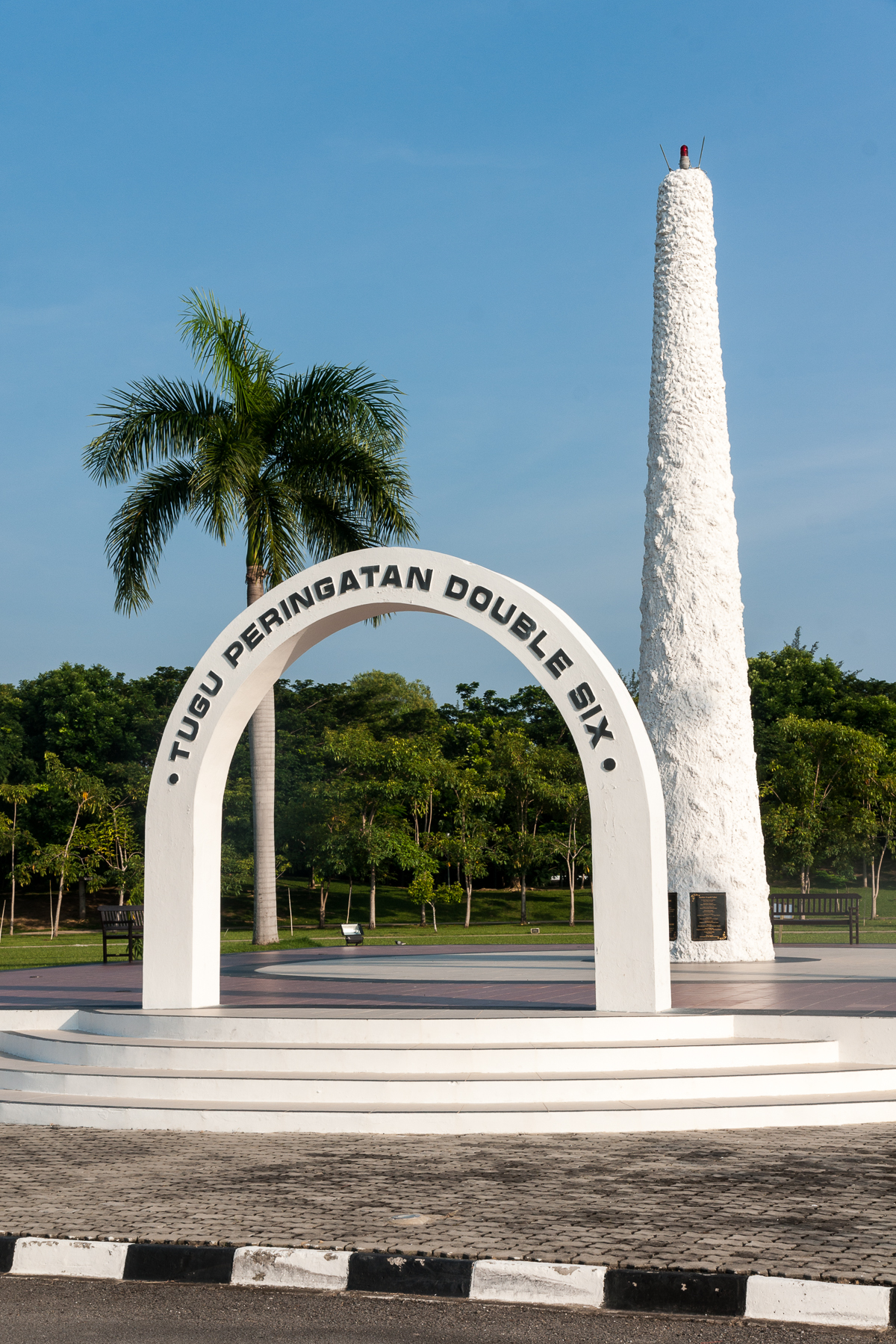
For the agreement between Sabah and Petronas signed in 1976, see this site's What Was the Double Six Sabah Tragedy? After Eleven Lives Were Lost; for how far the twenty-nine demands under the Malaysia Agreement have been met, there is a full account in The Agreement at Sixty.
The limits of the evidence#
As of 11 October 2026, this is what holds this article up, and where it does not stand firm:
- What was read is retelling, not originals. Sarawak's petition, Petronas' petition, the full text of the 1969 Emergency (Essential Powers) Ordinance, the original text of the Petroleum Development Act 1974, the original 1975 Vesting Deed, the 1954 and 1958 Orders in Council, and Hansard: this site obtained none of them. All statutory content comes from the Advocates Association's statement and media accounts, and is therefore treated uniformly as secondary.
- The substantive replies of the Federation and Petronas are not found in the public record. We saw only their 1 October positions on "which point to hear first", not their written submissions on the 1969 chain of extension.
- Checkable in only one outlet: the 2018 state assembly amendment and Awang Tengah's statement; the greenhouse gas ordinance named in Petronas' petition; the Prime Minister's January 2025 statement that the Petronas-Petros issue was "completely resolved" (it was not, afterwards).
- The filing date of Petronas' separate case is contradictory. Media have written that it was filed on 10 January 2026, but the judge granted leave only on 16 March; 10 January is more likely the date of the application, unverified, so the body text does not state it.
- Whether Sarawak also needed to obtain leave first is not found in the public record.
- The 2020 sales tax settlement figure: two outlets give slightly different numbers (about RM2.95 billion against RM3 billion).
- The scholarly layer is thin. This site has read only the 2025 ISEAS study and a seminar summary; specific articles by other scholars could not be verified, so none are included.
After 1 October, the case file gained a date: 25 January 2027.
On that day, which document will the panel open first? The 1954 Order in Council, or the lapse in 2012 that Sarawak says has already occurred? Whichever document the court reads first, that end of the line is the one pulled taut first; and the end pulled taut is tied to Sarawak's oil, and also to how our country writes down its own contracts.
Note: at the time of writing (11 October 2026), neither Sarawak's petition nor Petronas' separate case has been heard, and there is no ruling. This site will update after the hearing begins.
Sources 19 Every important claim here can be checked. Open it and see.
Do not trust this site. Check it — every source below is clickable.
-
Search for this source ⌕ no direct link — this button searches for the work 2026-10-11 Report this source
-
Search for this source ⌕ no direct link — this button searches for the work 2026-10-11 Report this source
-
Search for this source ⌕ no direct link — this button searches for the work 2026-10-11 Report this source
-
Search for this source ⌕ no direct link — this button searches for the work 2026-10-11 Report this source
-
Search for this source ⌕ no direct link — this button searches for the work 2026-10-11 Report this source
-
Search for this source ⌕ no direct link — this button searches for the work 2026-10-11 Report this source
-
Search for this source ⌕ no direct link — this button searches for the work 2026-08-26 Report this source
View excerpt ↓
According to Tengku Razaleigh, often credited as the Act's architect and Petronas' founding figure, Rahman Yakub proposed the royalty quantum of 5 per cent, which was then applied to all states. However, whether or not Sarawak's state assembly greenlighted this decision remains unclear.
-
Search for this source ⌕ no direct link — this button searches for the work 2026-10-11 Report this source
-
Search for this source ⌕ no direct link — this button searches for the work 2026-10-11 Report this source
-
Search for this source ⌕ no direct link — this button searches for the work 2026-10-11 Report this source
-
Search for this source ⌕ no direct link — this button searches for the work 2026-10-11 Report this source
-
Search for this source ⌕ no direct link — this button searches for the work 2026-10-11 Report this source
-
Search for this source ⌕ no direct link — this button searches for the work 2026-10-11 Report this source
-
Search for this source ⌕ no direct link — this button searches for the work 2026-10-11 Report this source
-
Search for this source ⌕ no direct link — this button searches for the work 2026-10-11 Report this source
-
Search for this source ⌕ no direct link — this button searches for the work 2026-10-11 Report this source
-
Search for this source ⌕ no direct link — this button searches for the work 2026-10-11 Report this source
-
Search for this source ⌕ no direct link — this button searches for the work 2026-10-11 Report this source
This site is written with AI assistance. Please check us.
AI can invent citations that look completely convincing — a real author's name, a plausible title, a sensible year, for a work that does not exist. This is not a theoretical risk; it is a known failure mode. That is why every source on this site is clickable. If a reference cannot be found anywhere, it may well not exist — and we want to know.
How to check us →
Reader Comments
Be the first to share your thoughts.